 Capital formation and risk sharing
STAGED INNOVATION PROCUREMENT
Lever last updated: 10 September 2026
Public purchasing that funds CDR technology through successive development stages before commercial readiness.
Cost
Low to Medium
Public buyers pay programme staff, technical assessment and suppliers’ design, prototype and field-testing contracts. A narrow design programme may cost EUR1–10 million annually, while several hardware demonstrations or sites can raise spending to EUR10–100 million.
Complexity
Medium
Evidence: NASA ran COTS through Space Act Agreements on existing authority, without new legislation; the DOE pilot uses prize authority.
Timeline
Medium
Evidence: COTS awards in 2006 led to first contracted resupply flights in 2012; the DOE pilot launched in September 2023 and named semifinalists in May 2024.
Integrity, transparency & MRV
Innovation & cost reduction
Social & environmental safeguards
Energy, transport & storage infrastructure
Inputs & capacity
Demand formation
Bankability and cost of capital
Policy architecture & coordination
Overview
Staged innovation procurement is targeted public purchasing for CDR technologies not yet ready for ordinary procurement. A public buyer contracts one or several suppliers for successive steps such as design, laboratory work, prototypes and field trials. Each supplier is paid for work, and more than one may continue when milestones and budgets permit. The process may end with a separate tender or continue into purchasing under one innovation-partnership procedure. Unlike a challenge prize, suppliers are paid for contracted work whether or not they reach a final stage. Unlike a grant, the work answers a future need of the buyer.
Key Considerations
This approach suits CDR methods beyond basic research that still need a laboratory prototype, pilot-scale system or first real-world demonstration before anyone can buy a dependable service. The buyer must decide where development starts and ends, what public need the technology should eventually meet, and whether it leads directly to a purchase or a new tender. Evidence should match maturity. Early work may test feasibility, while later stages should show that the full process removes more CO₂ than it emits, stores it durably, operates safely and can be verified. Milestones, payments, ownership of results and stopping rules must be clear.
Opportunities
Promising CDR approaches often stall between laboratory research and a field-tested service because few buyers will pay for the evidence needed before ordering removals. Staged procurement could fund that journey in manageable steps, give suppliers a clear operational goal and help buyers learn what performance and costs are realistic before committing at scale. Suppliers completing field trials can leave with operating data, a public-customer reference and a stronger case for private finance. These benefits depend on prototypes performing and a credible route to later demand.
Risks
Poorly chosen milestones can push a concept into field trials before it is safe, or exclude a method by demanding later-stage evidence too soon. Overly prescriptive specifications can lock in one pathway, while vague ones make suppliers impossible to compare. Programmes may produce prototypes that no agency buys. Slow payments and onerous data terms disadvantage smaller firms. Weak carbon accounting can reward equipment performance without showing credible net, durable removal at useful cost or scale.
Monitoring and Evaluation
The buyer should compare promised and verified technical performance, net-removal potential, cost, time and safety at each stage. It should record why suppliers advance or stop and whether pilots lead to later purchases, private finance or independent deployment. Results should determine whether to change milestones, phase budgets or timescales, continue a supplier, launch commercial procurement or stop the programme.
Stakeholder Engagement
Public buyers should map which less mature CDR approaches could meet their need with suppliers, researchers and experts before drafting specifications. Procurement lawyers decide the lawful route and ownership terms. Verifiers define evidence for each stage. Site operators, infrastructure providers and prospective users test practical requirements. Communities and civil society identify safety, resource and distributional concerns before field trials begin.
Governance Levels
Supranational programmes can finance joint procurements and set common conditions, while national agencies can run larger portfolios. Regional and city authorities can use the same approach where they control a future use, such as waste, water, land, buildings or local energy systems.
Implementation Strategies
The buyer should identify a need suppliers cannot meet, then consult the market to map approaches and maturity.
Publish the full milestone ladder and the anchor purchase volumes in the solicitation, so bidders price the whole journey.
It should use pre-commercial procurement when any purchase requires a later competition, or an innovation partnership when successful development may continue to supply.
One or several suppliers should receive phased contracts with clear milestones and can continue when they meet them and budgets permit.
Before field trials, the buyer should secure sites, permits, safeguards, verification, funding and a legal route to purchase.
Case Studies

AI4Cities Pre-Commercial Procurement
From 2020 to 2022, Helsinki, Amsterdam, Copenhagen, Tallinn, Stavanger and Paris Region jointly sought non-market-ready technology for lower-carbon urban energy and mobility. Their EUR6.6 million pre-commercial procurement contracted 41 suppliers for designs, 20 for prototypes and seven for field testing in participating cities. The completed programme shows that municipal and regional buyers can develop several approaches in parallel and pay suppliers for each satisfactory stage. Commercial purchasing was not automatic, however, so its CDR lesson is to establish the route from a successful field trial to later procurement before development begins.
THALEA and THALEA II
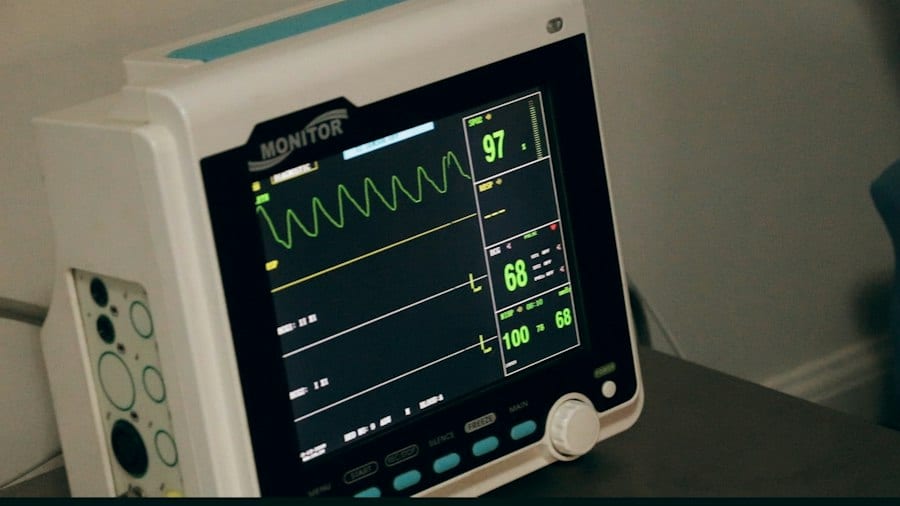
Five European hospitals used pre-commercial procurement in 2015 and 2016 to develop a manufacturer-independent telemedicine system for intensive-care units. A separate follow-on procurement, THALEA II, prepared the system for market use, secured medical-device certification and led Aachen University Hospital to purchase it. By the time the project closed in June 2021, the system had been deployed in 18 Austrian and German hospitals. This healthcare analogue shows how staged development can lead to an operational purchase without promising every developer a contract. It also shows why CDR programmes should anticipate certification and procurement requirements before the prototype stage ends.
US Carbon Dioxide Removal Purchase Pilot Prize
The US Department of Energy opened this USD35 million programme in 2023 and paid 24 semifinalists USD50,000 each in May 2024. It used legal authority to award prizes, so it is not a procurement precedent. Its design differed from a conventional challenge prize because later phases required binding offers and were intended to end with verified removals sold to the government. It tests purchase contracting, not early technology development. As checked in August 2026, the official administrator lists continuation as pending administration guidance, with no later awards or deliveries reported.
More Capital formation and risk sharing

Advance market commitments
A binding promise to buy a set volume of removals at an agreed price once suppliers deliver.
Cost
Low to Very high
Complexity
Medium to High
Timeline
Very short to Medium
Integrity, transparency & MRV
2–4Innovation & cost reduction
2–5Social & environmental safeguards
1–3Energy, transport & storage infrastructure
N/AInputs & capacity
N/ADemand formation
3–5Bankability and cost of capital
3–5Policy architecture & coordination
1–3
Carbon contracts for difference (CCfDs)
A guaranteed price per verified tonne that tops up revenue when the market price falls short.
Cost
Low to Very high
Complexity
High
Timeline
Short to Medium
Integrity, transparency & MRV
2–3Innovation & cost reduction
2–4Social & environmental safeguards
1–3Energy, transport & storage infrastructure
N/AInputs & capacity
N/ADemand formation
2–4Bankability and cost of capital
4–5Policy architecture & coordination
2–4
Publicly supported currency hedging
Public backing enabling a specialist provider to offer currency hedges CDR developers can't get commercially.
Cost
Low to Medium
Complexity
Low to High
Timeline
Very short to Medium
Integrity, transparency & MRV
N/AInnovation & cost reduction
N/ASocial & environmental safeguards
N/AEnergy, transport & storage infrastructure
N/AInputs & capacity
N/ADemand formation
1–2Bankability and cost of capital
3–4Policy architecture & coordination
1–2©2026 Alexander Mäkelä and Carbon Gap.
Except where otherwise indicated, this work is licensed under the Creative Commons Attribution–NonCommercial–ShareAlike 4.0 International Licence.
Headline and barrier scores based on Carbon Gap analysis.