 Capital formation and risk sharing
CARBON CONTRACTS FOR DIFFERENCE (CCFDS)
Lever last updated: 10 September 2026
A guaranteed price per verified tonne that tops up revenue when the market price falls short.
Cost
Low to Very high
Government pays administration and top-ups that cover the difference between the guaranteed price and a project’s market income. Gross cost depends on supported volume, price gaps and contract durations. Annually, 25,000 tonnes across a EUR100 gap costs EUR2.5 million. Ten million tonnes across EUR200 costs EUR2 billion. Two-way repayments can reduce net cost or generate revenue, but this scoring evaluates potential expenditure before repayments.
Complexity
High
Governments need legislation authorising long-term payments, a public body to sign contracts, rules for project selection and both prices, verified removal records, sales checks, repayments, penalties, subsidy controls and coordination across agencies.
Timeline
Short to Medium
Germany took 16 months from starting its industrial carbon-contract programme to signing the first agreements. The UK took 37 months from opening consultation on CDR price support to beginning negotiations with projects.
Integrity, transparency & MRV
Innovation & cost reduction
Social & environmental safeguards
Energy, transport & storage infrastructure
Inputs & capacity
Demand formation
Bankability and cost of capital
Policy architecture & coordination
Overview
A carbon contract for difference guarantees a selected project a price per verified tonne. The supplier sells removal units to private or regulated buyers and reports the market price received. When that price falls below the strike price, government pays the difference. Under a two-way contract, the supplier repays the excess when it rises above. Government therefore supports the sale without normally buying the unit. If it takes ownership or retires the unit, the arrangement becomes public procurement. Unlike an advance market commitment, which promises future purchases, a carbon contract for difference protects selected projects against insufficient market revenue.
Key Considerations
Governments can negotiate with projects or select them competitively. For example, developers could bid the guaranteed price they need, and the lowest credible bids win within the budget. The reference price is the market price deducted from that guarantee when calculating the government’s top-up. Choosing it is hardest design choice because CDR has no single transparent price, varying across methods, durability and contract terms. It could be the price a supplier receives from independent buyers or a published benchmark for comparable removals. Prices require checks against artificial discounts and related-party deals. Contracts would also need to define volumes, delivery dates, inflation, verification, reversals, unit ownership, repayments and non-delivery.
Opportunities
Predictable per-tonne revenue can help capital-intensive CDR projects attract equity and debt. Competitive rounds allow governments to compare the support projects require, while later rounds reveal whether costs are falling. Payments following verified sales and delivery limit support for failed projects, and two-way contracts recover public money when market revenue exceeds the guaranteed price. Support can decline as corporate buyers in voluntary markets or regulated companies in compliance markets begin paying enough to make projects viable without government top-ups.
Risks
CCfDs are complex to set up. They require rigorous legal contracts and clear rules on measuring and verifying delivered removals. A reference price above sales revenue leaves projects under-supported, while one below it increases public payments. Broad carbon prices may misprice removal methods; project sales prices can reward discounted or related-party transactions. A strike price set too low may deter bidders or leave projects unfinanceable, while one set too high overpays them. Depending on whether private or compliance buyers normally retain the units, public money can subsidise their purchases without giving government the associated credit or claim.
Monitoring and Evaluation
Programme managers should compare verified tonnes delivered, prices paid by buyers, government top-ups, delays, defaults and private investment secured. This shows whether contracts are getting projects operating without overpaying or subsidising sales that would have happened anyway. Results should shape future budgets, guaranteed prices, reference-price rules, eligibility, contract terms and penalties. Persistent non-delivery or windfall payments should trigger tighter rules.
Stakeholder Engagement
The finance ministry approves the budget and long-term spending. The department responsible for CDR defines eligible methods and selects projects. An agency or publicly owned company signs contracts and makes payments. Developers and buyers explain costs, sales and delivery constraints. Certification bodies test verification rules, banks assess whether contracts support lending, and government lawyers check procurement, competition and subsidy law
Governance Levels
Supranational institutions can fund and award contracts, as the EU Innovation Fund’s competitive bidding powers demonstrate. National governments can authorise long-term budgets and designate a public contract counterparty. Regional/State governments can run programmes within their fiscal powers, as the Australian Capital Territory’s reverse auctions show. Cities can sign smaller price-support contracts where local financial rules permit, as Manchester’s virtual power-purchase agreement demonstrates. These levels can act independently, although higher-level funding and common verification rules can support subnational programmes.
Implementation Strategies
Authorise long-term payments, set a multi-year budget or dedicated funding source, and appoint a public body to award contracts and settle payments.
Define eligible CDR methods, evidence and verification requirements, and clarify whether government only provides price support or also acquires and claims units.
Use competitive auctions where projects are sufficiently comparable; separate materially different project types and use negotiated contracts only where competition is not yet viable.
Set strike and reference prices, contract duration and supported volumes, using verified arm’s-length sales and safeguards against artificial discounts or related-party transactions.
Align payments with emerging carbon markets so government support falls as credible market revenues or official carbon prices increase.
Cap volumes and payments and define rules for verification failure, under-delivery, reversals, repayments and termination.
Verify removals before payment, publish delivery and payment results, and use early rounds or pilots to improve subsequent contract design.
Case Studies
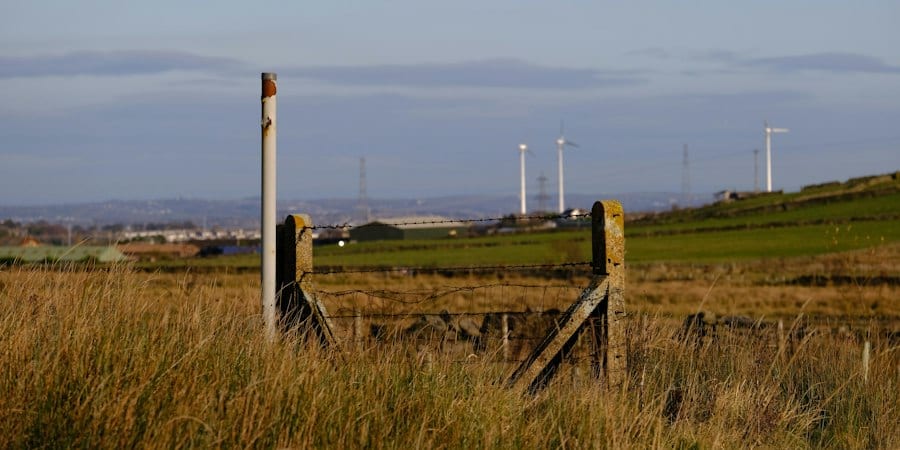
United Kingdom Greenhouse Gas Removals Business Model
The UK began consulting in July 2022 and published its full draft contract in August 2025, advancing two prospective GGR projects into negotiations. The proposed 15-year two-way contract lets projects sell credits in approved voluntary or compliance markets. Government would cover the gap between the guaranteed price and the achieved sale price, while projects would repay any excess. A July 2026 update said government was deploying the model, but no contract or removal delivery was reported. The case provides direct CDR design evidence, not operational proof.
United Kingdom electricity Contracts for Difference
The UK has awarded 15-year electricity contracts through competitive rounds since 2014, with a government-owned company signing contracts and settling payments. A 2019 government review found that the first two rounds awarded 5.48 gigawatts and that 96 per cent of the initially awarded capacity was on track. It also found that the contracts increased investor confidence and reduced exposure to volatile power prices. The case demonstrates operational price guarantees and competitive selection. It concerns renewable electricity, however, where a common wholesale price exists, rather than varied CDR methods without an equivalent benchmark.
Germany’s Climate Protection Contracts
Germany signed 15 two-way Climate Protection Contracts in October 2024 after companies competed for support to replace emissions-intensive industrial production. The agreements last 15 years and track changes in energy and carbon prices. When low-carbon production becomes cheaper than conventional production, companies repay government. The programme made up to EUR2.8 billion available and projected 17 million tonnes of avoided emissions, but no reductions had been reported at signing. It demonstrates long-term price-risk sharing at scale, while remaining an industrial emissions-reduction analogue rather than evidence that a contract has delivered CDR.

EU Innovation Fund competitive-bidding framework
In May 2023, the revised EU ETS Directive authorised the Innovation Fund to award support through fixed premiums, CfDs or CCfDs. The Commission has since run EU-wide auctions, but its hydrogen auctions and 2025 industrial-heat auction use output-based fixed premiums rather than CCfDs. The Fund has supported CCUS and CDR through ordinary grants, including a EUR180 million award to Stockholm Exergi’s BECCS project. The Commission’s published calls through August 2026 contain no EU-level CCfD for CCUS or CDR. The case therefore shows that a supranational institution has the necessary legal and auction machinery, but it is not an operational example of this lever.
More Capital formation and risk sharing

Advance market commitments
A binding promise to buy a set volume of removals at an agreed price once suppliers deliver.
Cost
Low to Very high
Complexity
Medium to High
Timeline
Very short to Medium
Integrity, transparency & MRV
2–4Innovation & cost reduction
2–5Social & environmental safeguards
1–3Energy, transport & storage infrastructure
N/AInputs & capacity
N/ADemand formation
3–5Bankability and cost of capital
3–5Policy architecture & coordination
1–3
Publicly supported currency hedging
Public backing enabling a specialist provider to offer currency hedges CDR developers can't get commercially.
Cost
Low to Medium
Complexity
Low to High
Timeline
Very short to Medium
Integrity, transparency & MRV
N/AInnovation & cost reduction
N/ASocial & environmental safeguards
N/AEnergy, transport & storage infrastructure
N/AInputs & capacity
N/ADemand formation
1–2Bankability and cost of capital
3–4Policy architecture & coordination
1–2
Public procurement of CDR
Direct government purchase of verified removals, with units owned or retired by the public buyer.
Cost
Low to Very High
Complexity
Low to Medium
Timeline
Short to Medium
Integrity, transparency & MRV
2–4Innovation & cost reduction
3–5Social & environmental safeguards
1–3Energy, transport & storage infrastructure
N/AInputs & capacity
N/ADemand formation
3–5Bankability and cost of capital
3–5Policy architecture & coordination
2–3©2026 Alexander Mäkelä and Carbon Gap.
Except where otherwise indicated, this work is licensed under the Creative Commons Attribution–NonCommercial–ShareAlike 4.0 International Licence.
Headline and barrier scores based on Carbon Gap analysis.