- Readiness
- High
- Storage duration
- Decades to centuries
- Reversal risk
- High
WITHOUT CARBON REMOVAL THERE IS NO NET-ZERO
What is carbon dioxide removal?
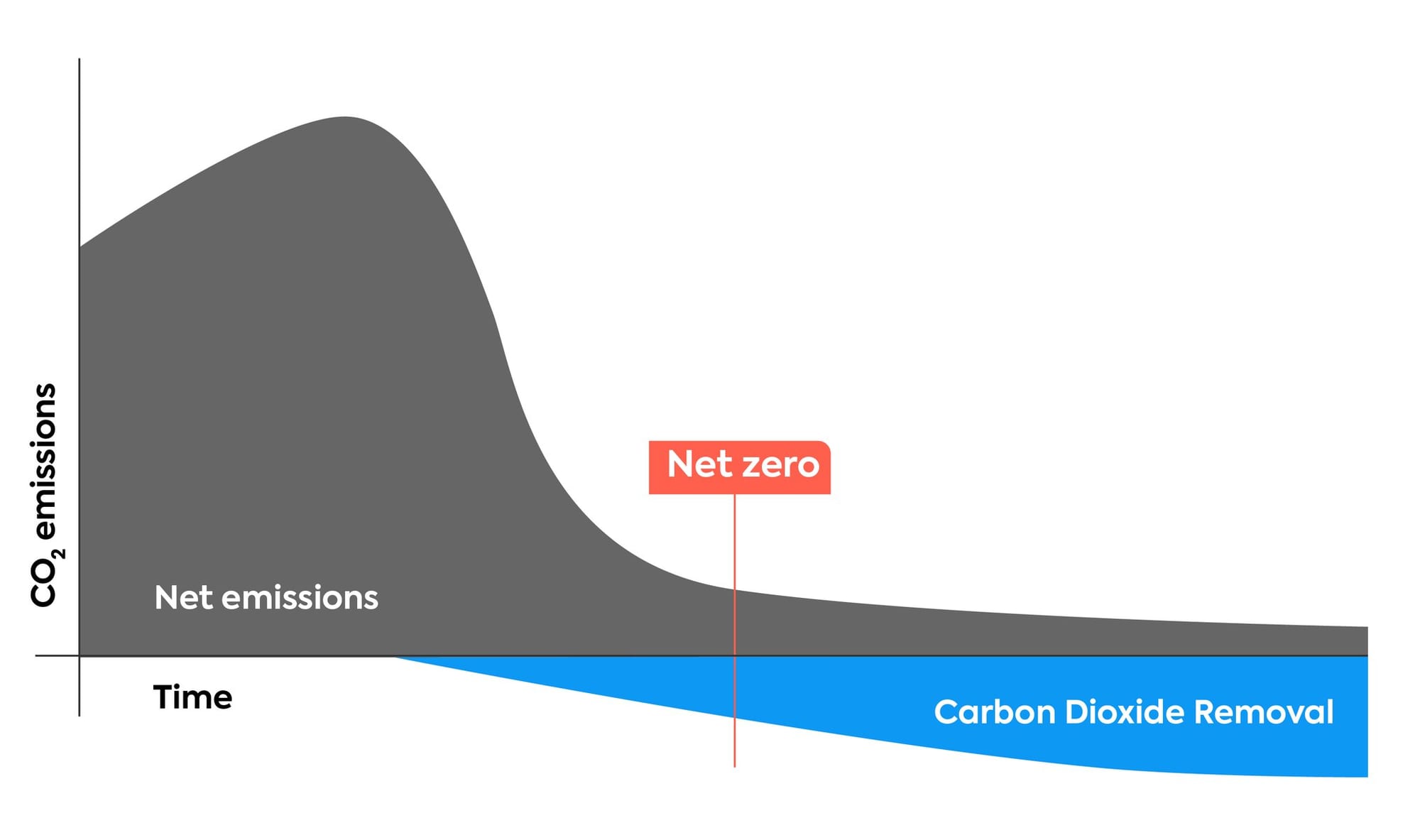
There's too much carbon dioxide already polluting the atmosphere and warming our planet. Carbon dioxide removal (CDR) is the process that allows us to pull CO₂ out of the atmosphere and store it safely using technological and biological approaches. CDR is the only solution in our climate toolbox that generates negative emissions.
Why do we need CDR?
The climate science is clear; based on all the main scenarios, reaching the Paris Agreement goals of limiting global warming to 1.5°C, or even 2°C, will require the massive scale-up of CDR technologies alongside drastic emissions reductions.
Similarly, for the EU to reach climate neutrality by 2050 and become net negative afterwards, it is critical to accelerate our efforts on both emissions reductions and carbon removals. But even with drastic cuts to our emissions, those from hard-to-abate sectors will be particulary difficult to cut entirely. We therefore need to employ carbon removal to ensure we reach net-zero and balance out hard-to-abate emissions. With time, the carbon we remove from the atmosphere will surpass the amount we emit, bringing our total emissions net negative.
How do we remove carbon from the atmosphere?
There are a range of methods for removing carbon from the atmosphere and storing it. Natural biological solutions naturally remove carbon, but store it less permanently. Other methods are technological and can store carbon for millennia. A wide portfolio of methods will need to be deployed across the EU to reach net-zero.
- Readiness
- High
- Storage duration
- Centuries to millennia
- Reversal risk
- High
- Readiness
- High
- Storage duration
- Decades to centuries
- Reversal risk
- High
- Readiness
- High
- Storage duration
- Decades to centuries
- Reversal risk
- High
- Readiness
- High
- Storage duration
- Decades to centuries*
- Reversal risk
- High
- Readiness
- Moderate
- Storage duration
- Centuries to millennia
- Reversal risk
- Low
- Readiness
- Moderate
- Storage duration
- Centuries to millennia
- Reversal risk
- Low
- Readiness
- Moderate
- Storage duration
- Centuries to millennia
- Reversal risk
- Low
- Readiness
- Moderate
- Storage duration
- Centuries to millennia
- Reversal risk
- Low
- Readiness
- Moderate
- Storage duration
- 10,000+ years
- Reversal risk
- Negligible
- Readiness
- Moderate
- Storage duration
- 10,000+ years
- Reversal risk
- Negligible
- Readiness
- Moderate
- Storage duration
- Decades to centuries
- Reversal risk
- Moderate
- Readiness
- Moderate
- Storage duration
- 10,000+ years
- Reversal risk
- Negligible
- Readiness
- Low
- Storage duration
- 10,000+ years
- Reversal risk
- Negligible
- Readiness
- High
- Storage duration
- Decades to centuries
- Reversal risk
- Moderate
- Readiness
- High
- Storage duration
- Centuries to millennia
- Reversal risk
- Low
- Readiness
- Low
- Storage duration
- Decades to centuries
- Reversal risk
- Moderate
- Readiness
- Low
- Storage duration
- Decades to centuries
- Reversal risk
- Moderate
- Readiness
- Moderate
- Storage duration
- 10,000+ years
- Reversal risk
- Negligible
- Readiness
- Moderate
- Storage duration
- Centuries to millennia
- Reversal risk
- Low
- Readiness
- Moderate
- Storage duration
- 10,000+ years
- Reversal risk
- Negligible
- Readiness
- Moderate
- Storage duration
- 10,000+ years
- Reversal risk
- Negligible
- Readiness
- Moderate
- Storage duration
- 10,000+ years
- Reversal risk
- Negligible
- Readiness
- Moderate
- Storage duration
- 10,000+ years
- Reversal risk
- Negligible
ACHIEVING DURABLE NET-ZERO
Carbon removal methods are wide ranging. Currently, most efforts are focused on nature-based methods, leading to imbalanced net-zero targets.
Carbon removal policies must ensure that carbon removal efforts follow the like-for-like principle so that fossil emissions are compensated by geologic removals (geochemical or synthetic) and emissions from the land-use sector from nature and biomass based methods (enhanced ecosystem management and biomass conversion). Doing so would create an equilibrium in accordance with natural carbon cycles.
Only by adhering to the like-for-like principle can we reach a sustainable net-zero.
WHY CDR IS UNIQUE AND DESERVES ATTENTION
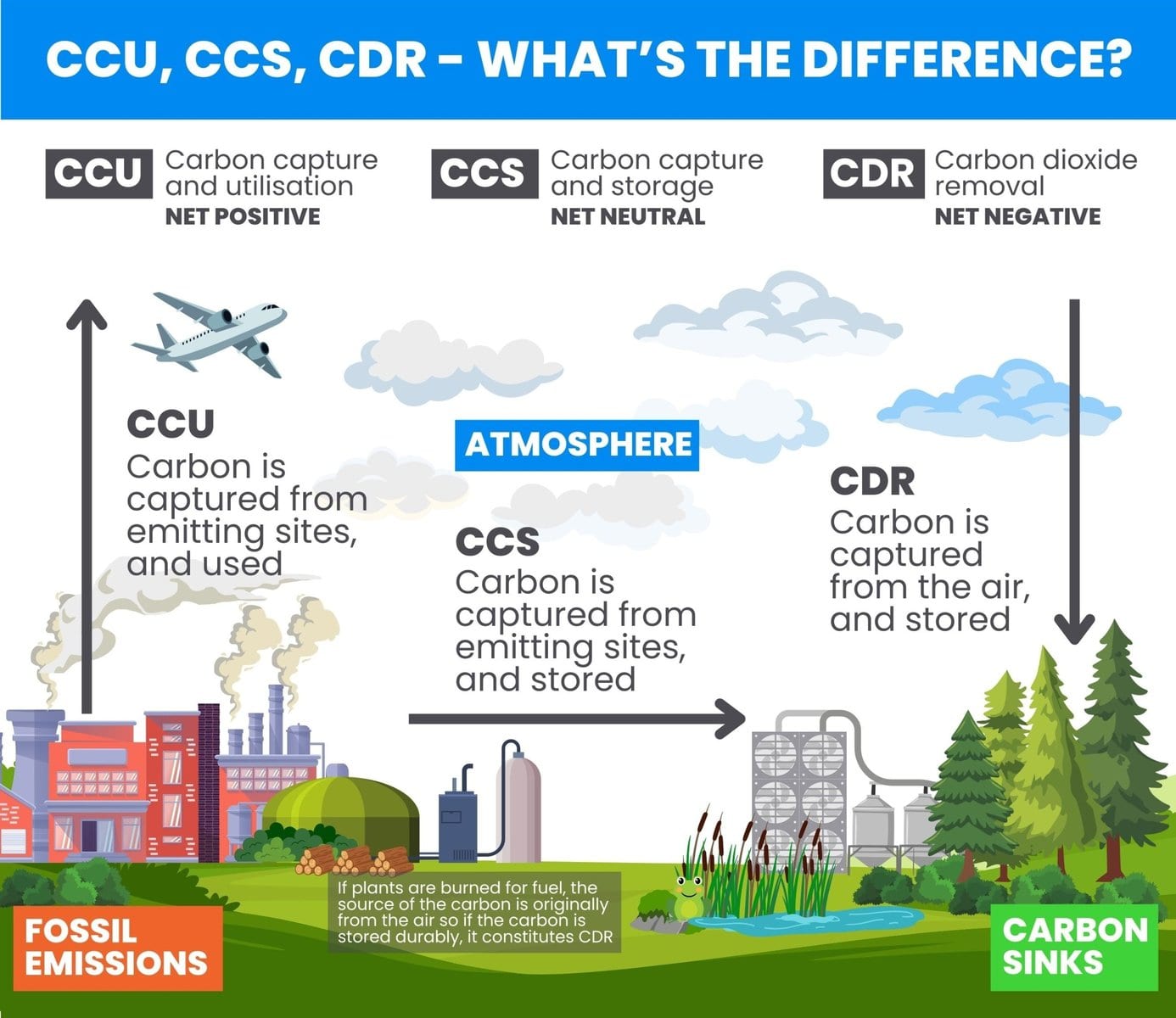
Carbon dioxide removal (CDR) often gets mixed-up with other carbon management technologies such as carbon capture and storage (CCS) and carbon capture and utilisation (CCU). Although specific CDR methods do require similar infrastructure as CCS technologies, the climate outcomes are very different.
Here are the basics to differentiate between:
CDR – the carbon is pulled from the atmosphere & safely stored = negative emissions
CCS – the carbon is captured just before it is emitted on industrial sites = avoided emissions
CCU – the carbon is turned into valuable products/commodities = avoided emissions (but could still end up in the atmosphere)
CDR is the only approach that tackles historical emissions and will help us achieve net negative.
EU policies at a glance
EU ETS Review
The EU's flagship carbon-pricing mechanism, covering ~40% of EU emissions, recently reviewed for the integration of carbon removals.
Explore
EU Climate Law
Sets a Union-wide, legally binding obligation to reach climate neutrality by 2050, with an interim 55% reduction target for 2030.
Explore
LULUCF Regulation
Sets a binding EU-wide target of 310 MtCO₂ of net nature-based removals by 2030 from land use, land-use change and forestry.
Explore
EU Buyers' Club
A voluntary initiative seeking to coordinate private investment in carbon farming and permanent carbon removals
Explore
Carbon Removals & Carbon Farming Certification Framework
The EU's first voluntary framework to certify high-quality carbon removals and carbon farming activities across the Union.
Explore
Explore the Policy Tracker
Up-to-date information on around 40 carbon removal-related EU policies and progress across 30 European countries.
Explore