 Integrity and accountability
LONG-TERM STEWARDSHIP FUNDS
Lever last updated: 10 September 2026
A dedicated fund, paid into by operators, covering monitoring and maintenance after storage sites close.
Cost
Low to Medium
The public authority pays for monitoring, maintenance and any repairs that become its responsibility at geological CO₂ storage projects. Costs depend on the number of wells, monitoring requirements and condition of each project. As a concrete benchmark, ADM’s 2022 Decatur application estimated USD 2.65 million for ten years of monitoring after injection stopped, averaging USD 265,000 annually. Twenty projects requiring comparable monitoring would therefore cost approximately USD 5.3 million annually; a hundred would cost USD 26.5 million, before administration and repairs.
Complexity
Medium to High
An existing authority needs protected accounts, contribution rules and financial review procedures. Creating a new public care programme also requires legislation, technical staff, records, contracting powers and coordination with storage and finance authorities.
Timeline
Short to Medium
Existing authorities can establish enforceable contributions within one to two years. New laws and fund administration may require two to five years before operators face material funded obligations.
Integrity, transparency & MRV
Innovation & cost reduction
Social & environmental safeguards
Energy, transport & storage infrastructure
Inputs & capacity
Demand formation
Bankability and cost of capital
Policy architecture & coordination
Overview
Governments can require geological storage operators to contribute to a dedicated fund that pays for monitoring, maintenance and eligible repairs after public authorities take over responsibility for a closed site. Contributions may be collected as a charge per tonne injected or as a payment before transfer, and money can be pooled across sites or reserved for each site separately. Collecting it while the operator is still active creates a funding source for care that may continue after the company exits. The fund finances the public successor's duties; separate rules determine when responsibility may transfer, what the operator must fund beforehand and who pays exceptional losses beyond the fund's resources.
Key Considerations
The storage regulator should define the work inherited after transfer, including well inspections, pressure and leakage monitoring, record retention, maintenance and specified repairs. A named public agency must be able to commission that work and enter the site. Sharing monitoring equipment, data systems, engineers and specialist repair contracts across sites may reduce duplication. Contributions should reflect the timing of those tasks, expected repair costs, inflation and prudent investment returns. The transfer decision remains separate: an operator must demonstrate containment and complete its obligations before the state accepts the site. Rules should identify who pays if contributions prove insufficient, which abandoned sites qualify for assistance and what happens when an incident falls outside the fund’s permitted uses.
Opportunities
Collecting contributions while storage operators earn revenue can pay for monitoring and site care after injection stops and responsibility transfers. The public successor can retain records, inspection teams and repair contracts without having to seek a new appropriation for each routine task. Communities then have a continuing institution responsible for the closed site. Defined contributions also help operators and lenders budget for handover. Pooling may spread administrative costs and differences in when sites need work, although it does not eliminate shared or severe losses. Collection over the injection period avoids concentrating the whole contribution at closure, provided rates and any final top-up are sufficient for the duties inherited.
Risks
A fund can be under-resourced if fewer tonnes are injected than expected, maintainance costs rise, investment returns disappoint or several sites need repairs together. Once operators have exited, recovering a shortfall may be difficult. A flat levy can also make safer sites subsidise riskier ones unless transfer standards and contributions reflect material differences. Poorly drafted rules may release an operator from responsibility before the state has sufficient funds or evidence of safe containment. Money cannot compensate for missing site access, records or contracting authority. Government needs a credible response to ordinary funding gaps and to exceptional losses beyond the fund’s design.
Monitoring and Evaluation
The fund administrator should publish contributions, investments, expected future costs and actual spending on each site or group of sites. Independent reviewers should compare available resources with updated engineering estimates and the expected timing of transfers. Findings should determine contribution adjustments, changes to investment policy and improvements to the monitoring programme. Reports should also identify how any shortfall or unexpectedly costly repair will be financed, rather than presenting a positive fund balance as evidence of adequacy.
Stakeholder Engagement
Operators provide engineering and cost information; storage regulators define the duties and assess transfers. Operators should advise on practical design without controlling contribution rates or the decisions that release them from responsibility. Treasury, fund managers and independent reviewers test investment and adequacy assumptions. Host communities need continuing reporting and a clear contact institution after operator exit, with their concerns considered in monitoring and remediation plans.
Governance Levels
National or state governments accepting post-transfer responsibilities can establish and operate the fund. Supranational law can require contributions and could establish a common fund with a specific mandate; this differs from operating the existing national arrangements. Private reserves remain under financial assurance unless they form part of the statutory stewardship mechanism.
Implementation Strategies
The storage regulator and future public custodian should prepare a schedule of inspections, monitoring, records, maintenance and eligible repairs for each site. Costing should combine routine work with the probability and cost of contingent interventions, then test severe correlated events separately. Insolvency risk should be included where the fund covers abandoned projects, not used as the sole proxy for all future care.
Legislation should define contributions, permitted spending, oversight and the conditions for starting publicly funded care. It should allow contribution rates to change through a transparent review process as costs and risks develop, without requiring a new primary law for each adjustment.
Government should choose pooled or site-specific accounts and set contributions using the present value of future duties and conservative assumptions about injected volumes and investment returns. A pre-transfer reconciliation should require any authorised top-up. Protected accounts, readily available reserves and contracted technical support should match when monitoring and repairs may be needed.
The administrator should review both the fund's resources and its ability to commission the required work. Published reviews should explain how shortfalls are addressed through additional operator payments, other industry resources or an explicitly authorised public contribution.
Case Studies

Alberta's post-closure stewardship fund
Alberta's carbon-storage framework includes a Post-Closure Stewardship Fund, a dedicated public fund financed by sequestration operators for long-term monitoring and maintenance. Contributions link operating projects to the cost of public responsibilities after an approved transfer. The mechanism gathers resources before the original operator exits, giving the successor institution a financing route for care that may outlast the company's involvement. It applies to geological storage serving CDR as well as fossil carbon capture and storage. The case demonstrates how contributions and a continuing public institution can be designed together. The practical test is whether contribution levels and spending powers match the duties actually inherited; establishment of the fund alone does not establish that every site has transferred or that all future costs are covered.

EU pre-transfer financial contribution
The EU CCS Directive requires storage operators to make a financial contribution before specified responsibilities pass to the public authority. Article 20 requires the amount to cover at least the anticipated monitoring costs over thirty years, while Article 18 separately governs whether the site qualifies for transfer. The contribution makes resources accompany the responsibility at handover, giving the operator a financing obligation before it exits. Member States determine the account and institutional arrangements through national implementation, so the model can be applied without one identical pooled fund across the EU. For geological CDR, the useful precedent is the timing and costing rule. Long-term care is financed in advance, although its eventual duration can exceed the minimum horizon used to calculate the contribution.
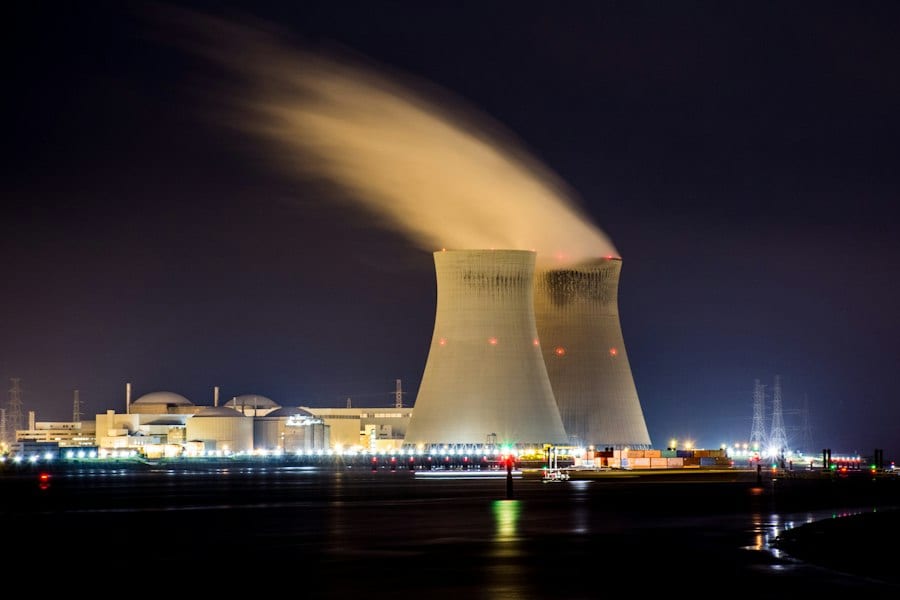
US Nuclear Waste Fund
The US Nuclear Waste Fund was created to finance federal disposal of spent nuclear fuel through charges on nuclear electricity. As the Congressional Budget Office's 2015 testimony explains, utilities paid a fee of 0.1 US cent per kilowatt-hour from 1983. The government collected revenue from the activity creating the future obligation, but did not deliver the planned disposal service. A court ordered the fee reduced to zero in November 2013 because the Department of Energy had not justified continued collection without an identifiable waste-management strategy; collection stopped in May 2014. For CDR stewardship, the lesson concerns institutional delivery as much as saving. A contribution scheme needs spending authority, an operating body and a workable care plan, or it can accumulate money while leaving its purpose unfulfilled.

North Dakota’s storage trust-fund fees and top-ups
North Dakota’s Industrial Commission regulates CO₂ storage and collects separate administration and long-term trust-fund charges. Its storage-fee rule specifies a seven-cent trust-fund contribution per ton injected for sources contributing to the state’s energy and agriculture economy. Other sources receive a rate determined through a hearing that considers post-closure monitoring and emergency or remedial costs. At the seven-cent rate, one million qualifying injected tons produces USD 70,000 in contributions, not an estimate of annual care expenditure. The rule also requires additional operator payments if the fund cannot meet the required activities at closure. This supplies an actual pricing and reconciliation mechanism. It shows why the initial collection formula needs an adequacy test before responsibility transfers, rather than assuming a small flat fee guarantees sufficient lifetime funding.
More Integrity and accountability

Measurement, reporting and verification protocols
A common rulebook specifying how projects must measure, report and verify their removals.
Cost
Very low to Low
Complexity
Low to High
Timeline
Short to Medium
Integrity, transparency & MRV
3–5Innovation & cost reduction
1–2Social & environmental safeguards
1–2Energy, transport & storage infrastructure
N/AInputs & capacity
1–2Demand formation
1–2Bankability and cost of capital
1–2Policy architecture & coordination
2–4
Certification schemes
Independent assurance that a removal project and its results meet defined quality standards.
Cost
Very low to Medium
Complexity
Low to High
Timeline
Short to Medium
Integrity, transparency & MRV
3–4Innovation & cost reduction
1–2Social & environmental safeguards
2–4Energy, transport & storage infrastructure
N/AInputs & capacity
1–2Demand formation
1–2Bankability and cost of capital
1–3Policy architecture & coordination
2–4
Carbon credit legal status
Legislation or guidance clarifying what legal rights a carbon credit holder actually has.
Cost
Very low to Low
Complexity
Low to High
Timeline
Short to Medium
Integrity, transparency & MRV
2–3Innovation & cost reduction
N/ASocial & environmental safeguards
N/AEnergy, transport & storage infrastructure
N/AInputs & capacity
N/ADemand formation
1–3Bankability and cost of capital
2–3Policy architecture & coordination
3–4©2026 Alexander Mäkelä and Carbon Gap.
Except where otherwise indicated, this work is licensed under the Creative Commons Attribution–NonCommercial–ShareAlike 4.0 International Licence.
Headline and barrier scores based on Carbon Gap analysis.