 System and capacity enablers
INDUSTRIAL MOBILISATION POWERS
Lever last updated: 14 September 2026
Special legal powers giving essential projects priority for scarce equipment and funding.
Cost
Very low to High
Prioritising existing orders mainly costs government staff time and oversight. Buying equipment or funding factory expansion can require much larger budgets. Costs depend on the scale of support; later repayments or resale income recover part of the spending.
Complexity
Low to High
Existing laws and procedures can support a limited intervention. A broader response requires agencies to coordinate purchases, funding and supplier obligations. New powers require legislation and procedures for deciding when to intervene and hearing challenges.
Timeline
Very short to Medium
Existing powers can alter delivery schedules within months. Factory support may secure investment within one to two years; creating new legal powers and administrative procedures may take two to five years before changing orders or investment.
Integrity, transparency & MRV
Innovation & cost reduction
Social & environmental safeguards
Energy, transport & storage infrastructure
Inputs & capacity
Demand formation
Bankability and cost of capital
Policy architecture & coordination
Overview
Government can activate special legal powers to give essential projects priority for scarce equipment and fund manufacturers to increase production. Such powers are generally used for defence, major emergencies or serious shortages that threaten essential services or strategic industries. They can allow government to obtain supply information, move selected orders ahead of other customers, combine purchases and finance additional factories. For CDR, a war or export restriction could cut supplies of CO₂ compressors and replacement parts, leaving removal plants unable to send carbon for storage. Government might then prioritise replacement deliveries and support alternative manufacturers. It could also seek to expand production for an accelerated national removal programme, for example if its climate plan required substantially more CDR after forests and soils absorbed less carbon than expected. These are possible future CDR applications. Government would need authority under the relevant law and evidence that ordinary purchasing or support could not resolve the shortage quickly enough. Giving orders priority changes who receives existing supplies; financing more production increases the quantity available.
Key Considerations
Government must establish what equipment is missing, how much is needed, which projects are affected and why normal purchasing or grants cannot solve the problem in time. A higher CDR target alone does not establish a qualifying emergency or authorise intervention. The relevant law must cover the proposed use. For suppliers, the central question is whether government can require them to fulfil a selected order before contracts they have already signed. Some laws permit binding instructions with defined grounds for refusing; others require the supplier's agreement first. The rules must explain which earlier customers may be delayed, whether the supplier is protected against claims for those delays, what it will be paid and how it can challenge an instruction it cannot fulfil. Factory expansion needs approved funding, customers for its output and the required environmental permits. Authorities must set end dates, protect worker safety and check whether preferential treatment of selected or domestic suppliers breaches competition or trade rules.
Opportunities
These powers can help restore removal operations after a serious supply disruption or accelerate construction when several projects are waiting for the same equipment. A priority order can bring forward a delivery, while public funding or commitments to buy equipment can persuade a manufacturer to add a production line. Government can combine orders from CDR developers and other industries that use the same components, giving manufacturers a stronger reason to expand. For a larger future removal programme, preparing suppliers before demand surges could prevent avoidable shortages. The benefit depends on resolving the actual cause of delay. Equipment support still requires a funded programme or buyers for the resulting removals.
Risks
Prioritising one project can delay another industry, including other climate investments. Poor selection can favour established suppliers or finance factories that later lack customers. Requirements to buy domestic products may raise costs or provoke trade disputes. Exceptional powers may remain in use after the shortage has ended. Conversely, abruptly withdrawing support can leave manufacturers unable to recover investments made at government's request. Authorities should assess effects on other customers and explain how ending the measures affects existing orders, funding commitments and supplier obligations.
Monitoring and Evaluation
Evaluation should distinguish delivering equipment sooner to selected buyers from producing more equipment overall. Government should examine delivery times, output, prices, unused production capacity and delays imposed on other customers, alongside public spending. This can show whether the intervention is relieving the shortage or merely moving it elsewhere. Results should guide whether to continue, modify or end the measures. Reviews should also examine whether support is becoming concentrated among a few suppliers and whether labour and environmental requirements are being met.
Stakeholder Engagement
Manufacturers and logistics providers should explain what they can supply, when they can deliver it and how quickly they could expand. CDR developers and other customers should identify the consequences of delayed or diverted deliveries. Finance officials assess proposed spending and whether new factories would have enough customers. Competition and trade authorities examine whether suppliers are being treated fairly, while labour and environmental authorities check proposed changes to production. Legislatures and auditors scrutinise why the powers are being used and for how long. Suppliers need clear instructions and a way to challenge demands they cannot reasonably meet.
Governance Levels
National governments can authorise and use these powers through domestic law. Supranational bodies can do so where Member States have granted that authority. Under the EU crisis legislation, the Council activates emergency arrangements and the Commission can coordinate purchasing and use specified powers to address shortages. National agencies may carry out and fund parts of the response. Regional and local authorities can assist, but participation alone does not give them the authority to invoke these national or EU powers.
Implementation Strategies
Government should identify the disruption or strategic shortage affecting CDR, establish why ordinary measures cannot resolve it in time and check whether existing law authorises action. Any new powers should specify qualifying circumstances, the evidence required, supplier rights and when the intervention ends.
The responsible authority should identify the equipment, quantities, delivery dates and suppliers involved. It should assess effects on other customers, establish whether suppliers must agree to priority delivery and choose the necessary combination of supply information, priority orders, joint purchases and factory support.
Funding should be approved before government commits to purchases or factory support. Contracts should link payments to delivery or construction milestones and explain what happens if a supplier fails, a factory lacks orders or government ends the intervention.
Independent review should compare the shortage relieved with public costs and disruption to other users. Government should adjust or end measures as supply recovers while honouring contracts with firms that invested in response.
Case Studies
United States clean-energy manufacturing determinations
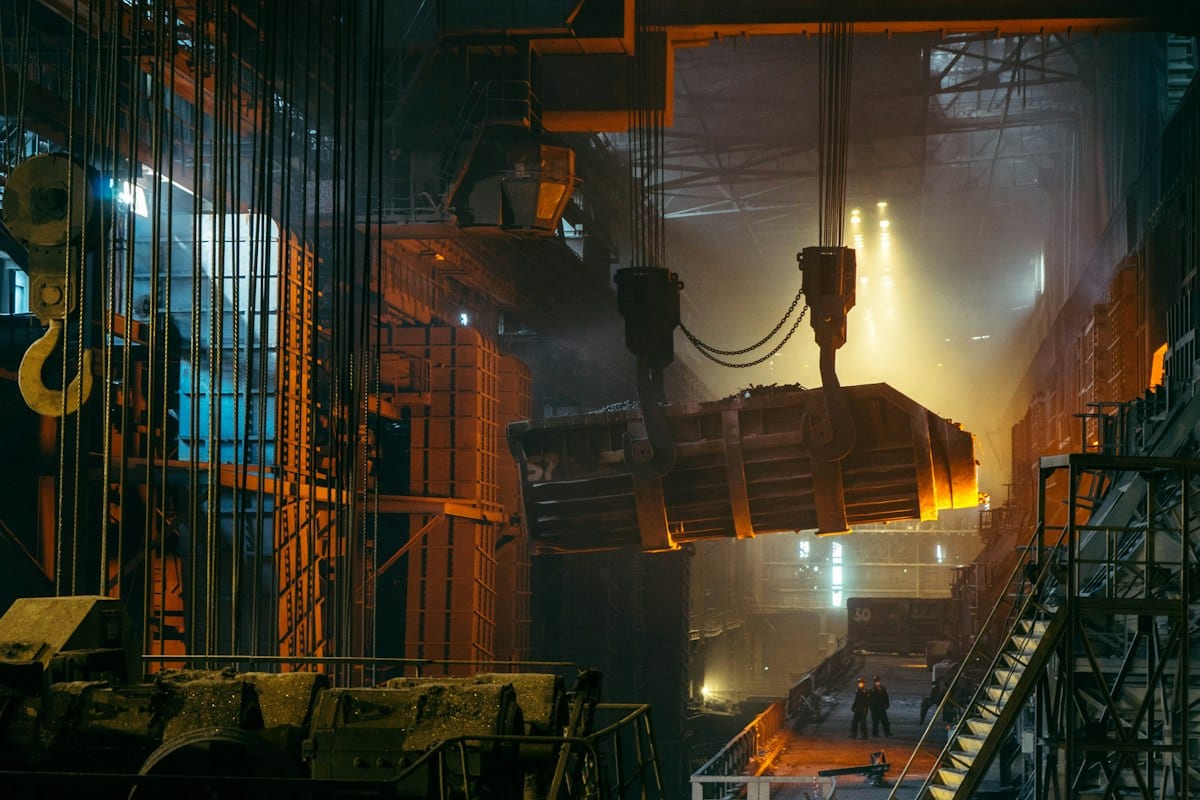
The US Defense Production Act lets government support industrial production considered essential to national defence. In June 2022, the president formally applied this authority to five clean-energy technology groups. The Energy Department then invited applications for USD 250 million to expand heat-pump manufacturing in April 2023, including new factories and changes to existing plants. The legal decision opened a route to public support for increasing supply. In March 2025, the next president revoked four of the decisions, including the one covering heat pumps. The sequence illustrates both the capacity-support tool and its vulnerability to policy reversal. CDR equipment could receive similar treatment only if it met the law's conditions. Revoking the authorisation does not, by itself, establish what happened to each grant already awarded.

United States grid-capacity determination in 2026
On 20 April 2026, the US president used the Defense Production Act to address shortages of electricity-grid equipment. The decision identified transformers, transmission components and related manufacturing inputs as essential to national defence, and found that industry could not supply them quickly enough without public action. It authorised the Energy Secretary to support production through purchases, commitments to buy future output and financial assistance. A manufacturer could therefore receive a stronger commercial reason to expand, alongside help financing that expansion. Electricity-intensive CDR could benefit from greater availability of grid equipment. The decision is evidence that the legal power was activated, however; it does not identify a CDR programme or establish that additional factories or equipment had been delivered.

European Union Internal Market Emergency and Resilience Act
The EU's Internal Market Emergency and Resilience Act, applicable from 29 May 2026, provides powers to address severe shortages during a formally activated emergency. When other measures cannot secure the necessary goods, the Commission can ask a manufacturer to supply named customers before fulfilling earlier orders. The manufacturer may decline. If it agrees, a formal Commission decision fixes the goods, quantities and deadlines and gives the order priority over earlier contracts. The order must be fairly priced. A supplier that complies does not owe compensation for necessary delays to earlier contracts governed by member-state law, provided it did not accept simply to escape those contracts. Deliberate or seriously negligent failure to fulfil the priority order can attract fines. The formal decision therefore allows delivery schedules to change while protecting the supplier and making its new commitment enforceable. CDR equipment could benefit only if it qualified under the crisis rules; the law itself does not establish a CDR emergency programme.
More System and capacity enablers

Cross-border CO₂ networks
Coordinated legal and technical rules letting CO₂ pipelines cross national borders.
Cost
Medium to Very high
Complexity
Medium to Very high
Timeline
Short to Long
Integrity, transparency & MRV
1–2Innovation & cost reduction
1–2Social & environmental safeguards
1–3Energy, transport & storage infrastructure
3–4Inputs & capacity
N/ADemand formation
N/ABankability and cost of capital
2–4Policy architecture & coordination
2–3
Permitting process streamlining
Reorganising how permitting authorities receive and decide project applications.
Cost
Very low to Medium
Complexity
Low to High
Timeline
Very short to Medium
Integrity, transparency & MRV
1–2Innovation & cost reduction
1–2Social & environmental safeguards
1–3Energy, transport & storage infrastructure
1–3Inputs & capacity
1–2Demand formation
N/ABankability and cost of capital
2–3Policy architecture & coordination
2–4
Infrastructure hubs
A shared site bringing electricity, water and CO₂ transport together for several users.
Cost
Medium to Very high
Complexity
Medium to High
Timeline
Medium to Long
Integrity, transparency & MRV
1–2Innovation & cost reduction
2–3Social & environmental safeguards
2–3Energy, transport & storage infrastructure
3–4Inputs & capacity
2–3Demand formation
N/ABankability and cost of capital
2–4Policy architecture & coordination
2–3©2026 Alexander Mäkelä and Carbon Gap.
Except where otherwise indicated, this work is licensed under the Creative Commons Attribution–NonCommercial–ShareAlike 4.0 International Licence.
Headline and barrier scores based on Carbon Gap analysis.