 Capital formation and risk sharing
FEED-IN TARIFFS / PER-TONNE SUBSIDY
Lever last updated: 10 September 2026
A guaranteed multi-year price per tonne removed, adapted from renewable-electricity feed-in tariffs.
Cost
Low to Very high
Public authorities pay the contracted amount for each verified tonne and cover selection, contract management and verification. Cost would depend on the programmes scale, ranging from small local to sustained national or supranational deployment.
Complexity
Low to High
An existing climate or finance agency can adapt grant and contracting systems with low complexity. A multi-method or cross-border programme is more complex because legislation, budgets, eligibility, auctions, verification, import rules and enforcement must be coordinated.
Timeline
Medium
From formal initiation, establishing authority, funding, eligibility, contracts and verification usually takes two to five years. The first material change occurs when selected projects use signed contracts to secure finance or approve construction.
Integrity, transparency & MRV
Innovation & cost reduction
Social & environmental safeguards
Energy, transport & storage infrastructure
Inputs & capacity
Demand formation
Bankability and cost of capital
Policy architecture & coordination
Overview
Feed-in tariffs first gave companies producing renewable electricity a guaranteed price for each unit delivered. Applied to CDR, a public authority could approve projects and offers a multi-year contract paying a fixed amount for every verified tonne, up to an agreed limit. Projects could receive a published tariff or compete for contracts through an auction. The resulting revenue can support construction and operation. Unlike a reverse tax credit, payment is available only to contracted projects. Unlike a contract for difference, the rate does not move with a market price. The instrument becomes procurement if the payer takes ownership of the removal.
Key Considerations
The central choice is how projects receive contracts. A published tariff is predictable but may overpay or attract little supply. Auctions can reveal the support projects require, although smaller suppliers may struggle to compete. Eligibility should be limited to net removals from atmospheric or sustainable biogenic carbon, with separate rates or rounds where costs and storage durability differ. Contracts should specify their length, delivery schedule, maximum funded tonnes, inflation adjustment, verification, payment timing and responsibility for delay, under-delivery or reversal. Ownership, private sales, other subsidies, imports, infrastructure dependencies and impacts on public budgets or consumer bills also need clear treatment.
Opportunities
Long-term payment for every verified tonne can give a project the income needed to raise construction finance and continue operating. Government pays only for delivery, while a spending or volume limit controls exposure. Competitive rounds can direct limited funding toward projects seeking the least support, and separate rounds can prevent newer methods from being crowded out. Repeated contracting may create demand across several projects, broaden the supplier base and generate evidence about costs and performance. Learning and cost reductions remain possible rather than guaranteed outcomes.
Risks
An excessive payment may waste public money, while an inadequate one may attract no projects. Without a volume cap, costs can exceed expectations. Auctions may concentrate support among large companies and exclude newer methods. Contracts awarded before transport or storage is ready may deliver late or fail. Weak eligibility or ownership rules can reward avoided fossil emissions instead of removals or allow one removal to be sold twice. Sudden cuts can deter investment.
Monitoring and Evaluation
The paying body should compare applications, contracts and verified deliveries, alongside support per tonne, total cost, whether awards go to only a few firms, finance raised, delays, other revenue and reversals. These results should determine future rates, budgets, method-specific rounds, delivery milestones and penalties. Persistent delivery shortfalls, overpayment or invalid removals should trigger tighter eligibility, stronger enforcement or programme suspension.
Stakeholder Engagement
Engagement should establish how many tonnes could credibly be delivered, what contract terms projects need, and whether transport and storage will be ready. It should test whether auctions are accessible to smaller suppliers, who owns each removal, how costs are funded and whether verification and safeguards are credible. Evidence should come from industry, finance, buyers, regulators, communities and civil society.
Governance Levels
Supranational institutions can fund cross-border programmes and establish common eligibility and contracting rules where their treaties and budgets permit. National governments can legislate spending and assign a climate, finance or energy agency to award contracts and make payments. Regions and states can do the same where they control relevant budgets and climate programmes. Cities can fund smaller schemes from municipal budgets. Higher levels may provide funding and shared verification rules while lower levels select projects and manage contracts. If any authority takes ownership of the removals it funds, the instrument becomes procurement instead.
Implementation Strategies
Map credible supply, costs, durability and infrastructure readiness before setting the budget, contract length and volume cap.
Start with a limited round, using published rates where costs are understood, bidding where competition exists, and separate method groups where necessary.
Standard contracts should define net tonnes, delivery schedules, payment timing, ownership, other revenue, reversal liability, penalties and termination.
Publish application, delivery, cost and reversal data, then adjust only future rates, caps or method groups as project costs fall or alternative revenues grow.
Case Studies

Sweden's bioenergy carbon-removal reverse auction
The Swedish Energy Agency began designing bioenergy carbon-removal support in 2021, opened an auction in August 2024 and awarded Stockholm Exergi more than SEK20 billion in January 2025. The project committed about 11 million tonnes over no more than 15 years, with payment after verified storage and lower public payments when it earns other subsidies or carbon-credit income. Stockholm Exergi made its final investment decision in March and broke ground in June 2025.
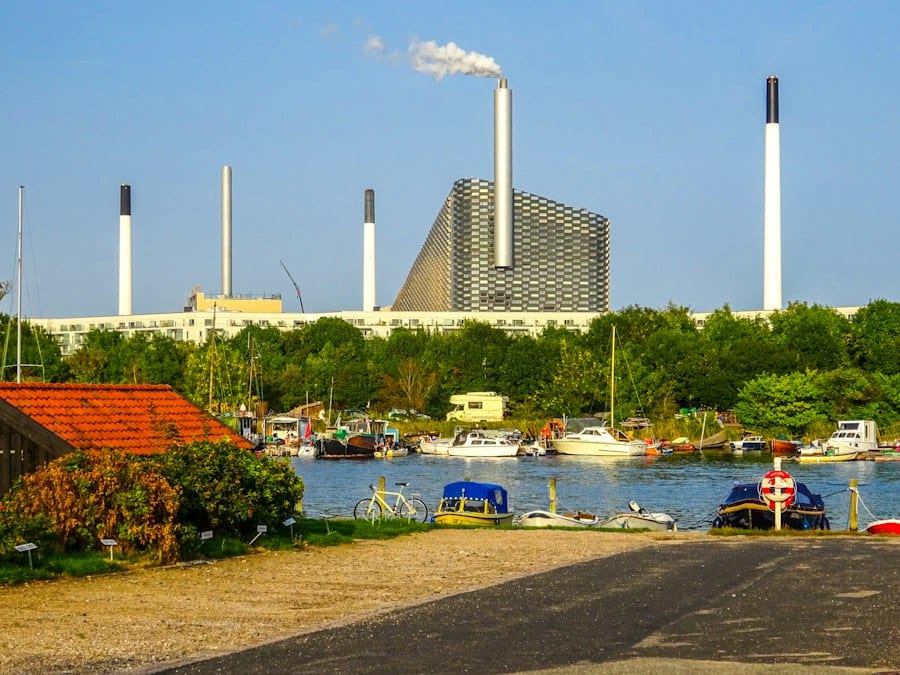
Denmark's Negative Emissions CCS Fund
Denmark established its negative-emissions fund in the 2022 Finance Act and opened a tender in August 2023 after consulting suppliers. In April 2024, the Danish Energy Agency awarded three contracts for 160,350 tonnes of biogenic CO₂ annually from 2026 through 2032. Fixed payments ranged from DKK968.5 to DKK2,600 per stored tonne and are due only after documented permanent geological storage. The agency still describes the volumes as planned, so delivery remains unproven. This direct CDR case shows how competitive selection, multiple awards and a spending cap can accommodate different project costs.

Ontario Feed-In Tariff Programme
Ontario launched an electricity feed-in tariff in 2009. Its system operator offered renewable generators long-term contracts paying a guaranteed price per unit delivered. In the 2016 FIT 4 round, it offered 936 contracts totalling 241 megawatts, mostly for small solar projects. The province closed new applications after its final 2016 round, while the operator continued managing signed contracts. This renewable-electricity analogue shows how a published tariff can reach many small producers. It does not demonstrate CDR payment or removal delivery, and closure shows that access depends on continuing political and budget authority.
More Capital formation and risk sharing

Advance market commitments
A binding promise to buy a set volume of removals at an agreed price once suppliers deliver.
Cost
Low to Very high
Complexity
Medium to High
Timeline
Very short to Medium
Integrity, transparency & MRV
2–4Innovation & cost reduction
2–5Social & environmental safeguards
1–3Energy, transport & storage infrastructure
N/AInputs & capacity
N/ADemand formation
3–5Bankability and cost of capital
3–5Policy architecture & coordination
1–3
Carbon contracts for difference (CCfDs)
A guaranteed price per verified tonne that tops up revenue when the market price falls short.
Cost
Low to Very high
Complexity
High
Timeline
Short to Medium
Integrity, transparency & MRV
2–3Innovation & cost reduction
2–4Social & environmental safeguards
1–3Energy, transport & storage infrastructure
N/AInputs & capacity
N/ADemand formation
2–4Bankability and cost of capital
4–5Policy architecture & coordination
2–4
Publicly supported currency hedging
Public backing enabling a specialist provider to offer currency hedges CDR developers can't get commercially.
Cost
Low to Medium
Complexity
Low to High
Timeline
Very short to Medium
Integrity, transparency & MRV
N/AInnovation & cost reduction
N/ASocial & environmental safeguards
N/AEnergy, transport & storage infrastructure
N/AInputs & capacity
N/ADemand formation
1–2Bankability and cost of capital
3–4Policy architecture & coordination
1–2©2026 Alexander Mäkelä and Carbon Gap.
Except where otherwise indicated, this work is licensed under the Creative Commons Attribution–NonCommercial–ShareAlike 4.0 International Licence.
Headline and barrier scores based on Carbon Gap analysis.