 Capital formation and risk sharing
CO-OPERATIVE AND COMMUNITY OWNERSHIP FRAMEWORKS
Lever last updated: 10 September 2026
Legal structures letting residents, workers or Indigenous groups hold genuine ownership stakes in removal projects.
Cost
Very low to Medium
Public authorities or project sponsors pay for legal design, disclosure, administration, advice and ownership records. Voluntary offers can be inexpensive, while matched investment or dedicated support raises direct costs.
Complexity
Low to High
A voluntary offer can use existing company and co-operative law. A mandatory framework requires securities rules, investor disclosures, ownership records, pricing checks, enforcement and coordination with planning, finance and removal-verification systems.
Timeline
Short to Medium
Where legal forms exist, a project can launch a share offer within one to two years. New rights, investor protections and matched funding may take longer before residents invest.
Integrity, transparency & MRV
Innovation & cost reduction
Social & environmental safeguards
Energy, transport & storage infrastructure
Inputs & capacity
Demand formation
Bankability and cost of capital
Policy architecture & coordination
Overview
Governments, project sponsors and public or philanthropic funders can create legal and financial arrangements that let residents, workers, Indigenous groups or local authorities buy genuine ownership stakes in CDR projects. The tools include co-operative or community-business legal forms, simpler disclosure for small share offers, standard governance documents, mandatory local offers and public or philanthropic money invested alongside residents. Ownership can bring local capital, votes and financial returns into affected places. It differs from consultation, community payments or revenue sharing because participants own part of the project and share its risks. It does not certify removals or create demand for them.
Key Considerations
The framework needs a clear definition of the eligible community, the share offered, its price, voting and dividend rights, and protection against later dilution or forced sale. Plain-language disclosure should explain that shares may be difficult to sell and can lose value if construction, removal delivery or credit revenue disappoints. Small minimum investments, matched funding or a community trust can broaden access beyond wealthier residents. Indigenous ownership should follow self-determined governance and free, prior and informed consent. Ownership cannot replace consultation or safeguards. Agreements also need clear treatment of removal credits and liability if stored carbon is released.
Opportunities
Community ownership can bring long-term local capital and knowledge into a project while giving affected people an enduring voice in major decisions. Financial returns and asset value can remain in host areas rather than arriving only as one-off compensation. The approach may suit projects whose land, feedstocks or infrastructure depend heavily on local relationships. Public or philanthropic matching can widen participation. No CDR-specific framework has yet shown that these effects occur at scale, and ownership should not be treated as proof of consent.
Risks
Share offers may favour wealthier residents, exclude renters or neighbours outside the chosen area, or provide a small stake without meaningful influence. Households could lose money if construction fails, carbon-credit revenue falls or removals must be replaced. Developers may present ownership as a substitute for consultation or safeguards. Refinancing or sale can later dilute community rights, while mandatory offers can add legal cost even where too few residents wish to invest.
Monitoring and Evaluation
Evaluation should examine the shares offered and purchased, who invested, voting participation, returns, losses and ownership retained after refinancing. It should also test whether ownership changed project decisions, access to finance or local benefit distribution while auditing removal delivery separately. Exclusion, failed offers, misleading disclosure or rapid dilution should inform changes to eligibility, investor protection or matched support.
Stakeholder Engagement
Engagement should determine who is affected, who may invest and what ownership rights would be meaningful and affordable. Residents, workers, Indigenous governments and community organisations need independent advice before agreeing terms. Project sponsors, lenders and regulators should resolve pricing, disclosures, voting, consent, refinancing and removal-credit liability without treating an ownership offer as a substitute for safeguards.
Governance Levels
Supranational institutions can establish common rules for co-operative entities, public share offers and community participation. National lawmakers can create ownership rights and investor protections. Regional and state governments can do the same where these powers are devolved. Municipalities can co-found project companies, invest alongside residents or use public land and development agreements to secure community ownership where local law permits. Project sponsors and co-operatives determine the shares, voting rights and protections in voluntary projects. They may work together, but each can directly create or implement an ownership arrangement. Philanthropic funding may support participation or advice but cannot establish ownership rights.
Implementation Strategies
Implementors should decide who qualifies to invest, whether the offer is voluntary or mandatory, and what ownership, voting and dividend rights it provides.
Co-operative, company, securities and planning rules should be aligned, with proportionate disclosure and protections against dilution or forced sale.
Independent advice, affordable minimum investments and matched funding can broaden participation, while clear documents explain investment and reversal risks.
Participation, losses, voting influence and retained ownership should inform later changes without treating investment as evidence of community consent.
Case Studies
EU Renewable Energy Communities Framework
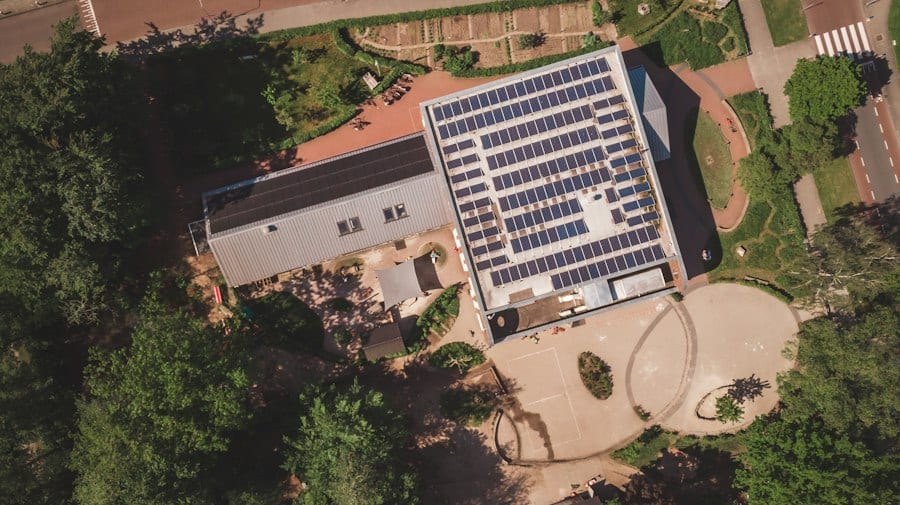
The EU’s 2018 Renewable Energy Directive requires Member States to give households a right to participate in renewable-energy communities and remove unjustified regulatory barriers. Article 22 also requires fair procedures, access to finance and support for public authorities helping establish communities. The directive binds Member States but leaves national governments to choose legal forms and implement detailed rules. It concerns community-owned energy rather than CDR and does not prove that communities obtained shares or returns. It demonstrates that a supranational legislature can require national enabling frameworks while project ownership remains implemented below EU level.

Middelgrunden Municipal and Co-operative Ownership
Completed in 2000, Denmark’s 40-megawatt Middelgrunden wind farm has 20 turbines. A utility owned by the Municipality of Copenhagen holds ten, while a co-operative representing about 8,500 shareholders owns the other ten, according to an EU-funded operational report. The structure joined municipal finance and engineering with resident ownership in one operating asset. The project concerns renewable electricity rather than CDR, and the report does not prove that ownership reduced opposition. It shows that a city enterprise and residents can share genuine project ownership when national law and finance permit it.

Denmark’s Former Local Share-Offer Rule
Denmark’s Renewable Energy Act required wind developers to offer at least 20 percent of project shares at cost to nearby residents. Danish Energy Agency guidance required equal shareholder rights, limited each buyer’s loss to their investment and required independent price checks. Law 738 of 30 May 2020 abolished the scheme for most new projects from 1 June 2020. The rule concerned wind power rather than CDR. It shows how national legislation can make local ownership enforceable and protect small investors, while its repeal demonstrates that ownership rights depend on continuing political support.

Community Shares Booster Fund
Power to Change and partner organisations have operated England’s Community Shares Booster Fund since 2016, providing planning grants and matching money invested by residents. In August 2026, programme operator Co-operatives UK reported that every GBP1 invested by the fund attracted GBP3.99 from communities, with 48 percent going to the most deprived 30 percent of areas. The fund concerns community businesses rather than CDR. It shows how matching and advice can help communities complete genuine share offers, but does not give funders authority to create ownership rights or prove project performance.

South Africa’s Renewable-Energy Community Trusts
South Africa’s Renewable Energy Independent Power Producer Procurement Programme began awarding projects in 2011. Early rounds required nearby communities to own at least 2.5 percent of each project company, usually through a debt-financed trust. Research based on more than 80 interviews found average holdings of 9 to 12 percent, but dividends commonly serviced acquisition debt for seven or eight years and some trusts lacked capacity or representative leadership. The programme concerns renewable electricity rather than CDR. It demonstrates how national procurement can require local equity and why ownership without suitable finance, advice and accountable governance may deliver little immediate influence.

British Columbia First Nations Equity Requirements
British Columbia’s publicly owned utility made First Nations equity a condition of its 2024 and 2025 renewable-power procurements. Bids required at least 25 percent ownership by a First Nation associated with the project area. BC Hydro awarded ten contracts in December 2024, with nearly every project achieving majority First Nations ownership. Four further contracts awarded in May 2026 all reached 51 percent, representing more than CAD2 billion of Indigenous equity. The scheme concerns wind and solar power rather than CDR. It shows that a regional government can make meaningful community ownership an eligibility condition.

Tiwi Plantations Corporation
In February 2026, Australia’s Clean Energy Finance Corporation committed up to AUD40 million to an AUD81 million plantation project owned by Tiwi Plantations Corporation and managed by Midway. The corporation is owned, operated and governed by all eight Tiwi clans. The public investor reports that 30,000 hectares are planned, with about five million Australian Carbon Credit Units projected, while the first two stages are registered for an estimated 865,000 units. The announcement reported forecasts rather than issued credits. The case directly demonstrates Indigenous corporate ownership of a removal project combined with public and private capital.

Mikoko Pamoja
Mikoko Pamoja began in Gazi Bay, Kenya, in 2010 and is owned by the local community. A community organisation manages mangrove protection and restoration, sells Plan Vivo credits and directs revenue to water, schools and other priorities. Plan Vivo reports 22,169 credits issued and 1,081 participating households. Because the project combines reforestation with avoided deforestation, not every credited tonne is a removal. It provides direct operational evidence that a community body can control a carbon project, govern its revenue and deliver verified units rather than merely receive benefits from a developer-owned scheme.

Khasi Hills Community REDD+ Project
India’s Khasi Hills project began in 2011 and is coordinated by a federation of Indigenous governments. Eighty-six community groups manage communal forests and use carbon revenue for fire control, assisted natural regeneration and local livelihoods. Plan Vivo reports 532,459 credits issued from work across approximately 27,000 hectares. Because the project combines avoided deforestation with forest regeneration, only part of its credited climate benefit represents carbon removal. It nevertheless shows how traditional governments and community institutions can collectively manage an operating carbon project across many villages without requiring households to purchase conventional company shares.
More Capital formation and risk sharing

Advance market commitments
A binding promise to buy a set volume of removals at an agreed price once suppliers deliver.
Cost
Low to Very high
Complexity
Medium to High
Timeline
Very short to Medium
Integrity, transparency & MRV
2–4Innovation & cost reduction
2–5Social & environmental safeguards
1–3Energy, transport & storage infrastructure
N/AInputs & capacity
N/ADemand formation
3–5Bankability and cost of capital
3–5Policy architecture & coordination
1–3
Carbon contracts for difference (CCfDs)
A guaranteed price per verified tonne that tops up revenue when the market price falls short.
Cost
Low to Very high
Complexity
High
Timeline
Short to Medium
Integrity, transparency & MRV
2–3Innovation & cost reduction
2–4Social & environmental safeguards
1–3Energy, transport & storage infrastructure
N/AInputs & capacity
N/ADemand formation
2–4Bankability and cost of capital
4–5Policy architecture & coordination
2–4
Publicly supported currency hedging
Public backing enabling a specialist provider to offer currency hedges CDR developers can't get commercially.
Cost
Low to Medium
Complexity
Low to High
Timeline
Very short to Medium
Integrity, transparency & MRV
N/AInnovation & cost reduction
N/ASocial & environmental safeguards
N/AEnergy, transport & storage infrastructure
N/AInputs & capacity
N/ADemand formation
1–2Bankability and cost of capital
3–4Policy architecture & coordination
1–2©2026 Alexander Mäkelä and Carbon Gap.
Except where otherwise indicated, this work is licensed under the Creative Commons Attribution–NonCommercial–ShareAlike 4.0 International Licence.
Headline and barrier scores based on Carbon Gap analysis.