
CDR in the ETS: ET'S all about encouraging emissions reductions and greenhouse gas removals
Explore how integrating carbon removal into emissions trading can drive demand while safeguarding climate integrity, with insights from the UK ETS approach and EU policy debates.
It’s been a busy summer for carbon removal in Europe. Policy is proceeding at pace: methodology development in the CRCF, plans to integrate carbon dioxide removal (CDR) into emissions trading, and major national-level developments (Germany, Finland). But amongst the activity, we want to zoom in on a key development that we think is a cause for optimism. The UK Government is planning to integrate removals into the UK Emissions Trading Scheme (ETS), a critical policy to build demand for CDR and thus drive scale-up, and published a document this summer that lays out the approach for doing so. As part of these plans, UK policymakers have outlined a plan to manage mitigation deterrence and uphold climate integrity in the ETS.
Why is this important? CDR plays a crucial, but limited role in the decarbonisation of the economy. While it’s needed to address certain emissions that cannot otherwise be abated, other emissions can and must be cut at source. Issues arise when the use of CDR crosses this boundary – when CDR replaces emissions reductions and leads to “mitigation deterrence”.
Managing mitigation deterrence is key to deploying CDR effectively and sustainably. Designing policy to effectively address the risk of mitigation deterrence is thus a core objective.
The concept of mitigation deterrence describes the risk of delaying or stopping emissions reductions due to the availability of alternative mitigation options, among them carbon removal. This could happen through various routes. We look at mitigation deterrence in detail in a 2023 paper by Carbon Gap.
Emissions trading today – no CDR integrated
How does emissions trading currently work in the UK, EU, and similar systems? The system covers certain high-emitting sectors of the economy (approximately 25% of UK territorial emissions) and places a limit on how much installations in those sectors emit. To establish and enforce this limit, government creates and issues allowances – essentially permits to emit. The total number of allowances is limited. In order to emit, covered entities must acquire an allowance from the available pool and it back to government. The limit on total allowances, what is referred to as the ETS “cap”, declines over time, aiming to drive increased effort by covered entities to reduce emissions (by constraining supply, increasing allowance prices, and thus making it more expensive to emit). The rate at which the cap reduces each year is a policy and (increasingly) political choice, which in the UK and EU is strongly informed by technical advice from climate advisors.
Figure 1 show how this system works today. Allowances are limited in line with the cap, which declines over time. Only one type of allowance is in circulation, which represents the right to emit a tonne of CO2eq. Removals do not currently play a role in the system.
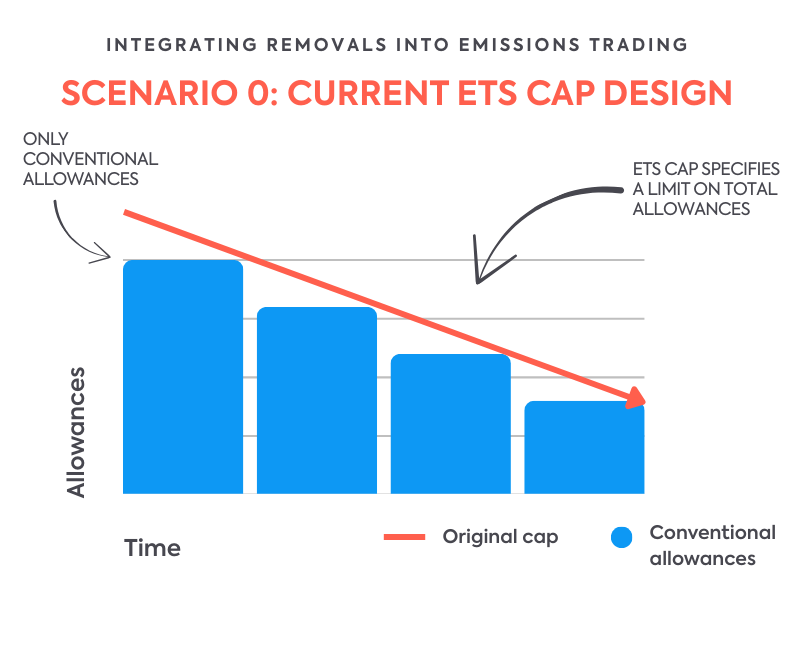
Figure 1: Schematic showing the current functioning of emissions trading systems like those in the UK and EU.
Integrating CDR: How mitigation deterrence may arise
The UK Government and the EU have each have (proposed) commitments to integrating carbon dioxide removals into their emissions trading systems. The UK is ahead of the EU in this process, outlining proposals for when and how this integration might be done in a 2024 consultation document and July 2025 government consultation response. In particular, the UK has indicated it will differentiate removal allowances from “conventional” allowances. While conventional allowances are essentially just permits to emit (sometimes called a “fiat” allowance), removal allowances are underpinned by a physical product – a tonne of removed carbon. While these two allowances have the exact same compliance value, they have different physical implications.
The different climate impact of the two allowance types can be understood in terms of gross and net emissions. Here’s an exampl, but the net effect would be 10 tonnes of CO2eq added to the atmosphere, as four tonnes of emissions are cancelled out by four tonnes of underpinning removals (assuming that carbon is permanently stored away and not released later). CDRs thus enable a distinction between the net and gross effect of emissions in the system. This could also drive emitter behaviours – some may continue to emit knowing they can limit the net effect by using removals.
Several options are on the table in terms of how removals might interact with the pre-existing cap on allowances once they are integrated. These options depend on whether removal allowances follow the same rules as conventional allowances (i.e., be subject to the original cap), or different ones (i.e., be exempt from the cap, or have their own separate cap).
There is a clear concern that adding removals to an ETS increases the total number of allowances, meaning more emissions happen overall (the gross cap increases). This scenario is illustrated in Figure 2 and is a clear example of mitigation deterrence – the availability of removals allowances causes emissions to continue, despite clarity that emissions need to be abated rapidly. Even if the net climate effect is theoretically the same for a given year (because the extra emissions are neutralised by removals), this situation is problematic. The result is that the economic transition is not incentivised over time and the likely limited supply of removals is depleted. Additionally, non-permanent CDR could lead to reversals if and where not properly managed. According to the European Scientific Advisory Board on Climate Change, “direct and unconstrained integration of removals into the EU ETS is not a viable option”.
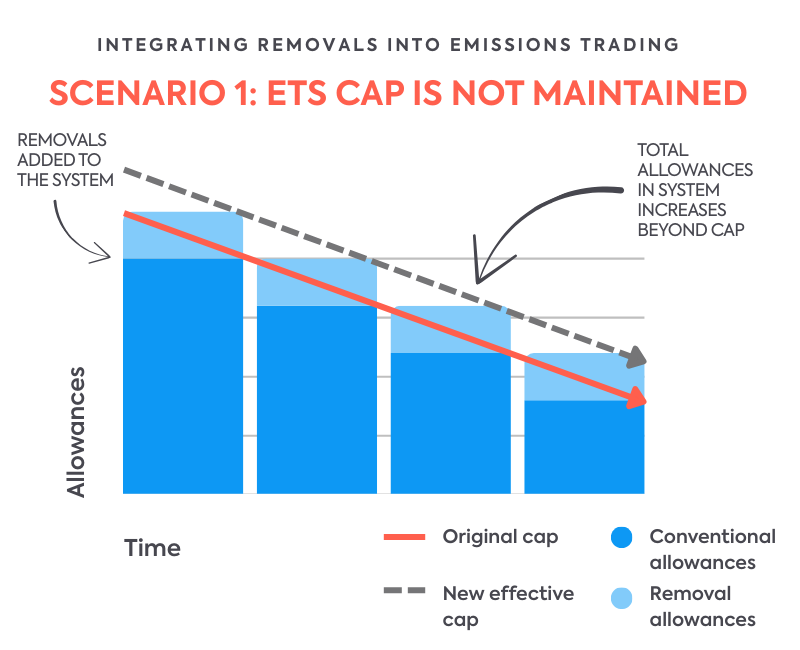
Figure 2: Schematic showing a possible design of CDR integration into an emissions trading system, in which mitigation deterrence may arise.
Managing the risk of mitigation deterrence: Maintaining the cap
The UK proposal is key to addressing this situation. Outlined in the 2024 consultation document, the UK Government proposes to keep its current emissions cap in place while integrating removals, by using a one-in-one-out substitution approach. Therefore, for any CDRs entering the system, a conventional allowance is removed. Additionally, the proposed framework means that the ambition of the ETS is increased overall, as net emissions are lower than the gross cap.
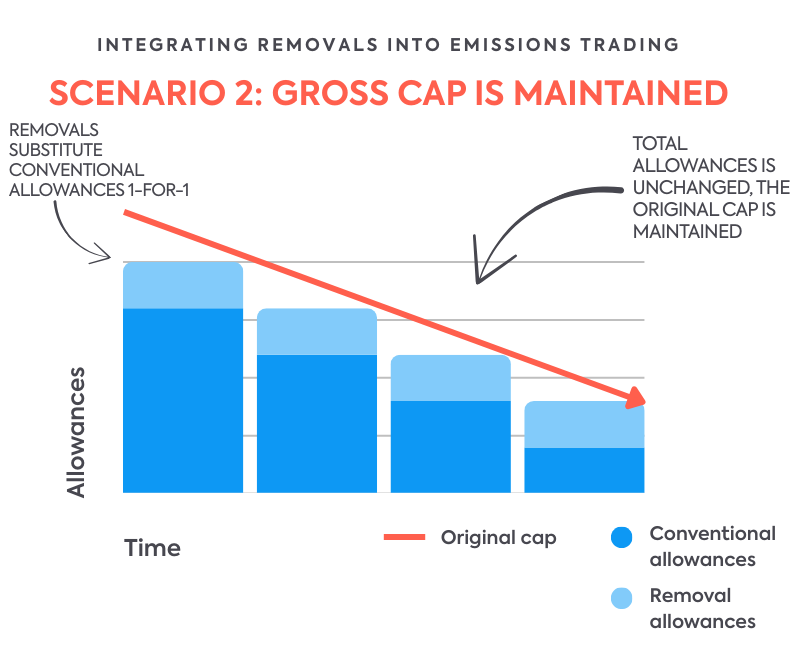
Figure 3: Schematic showing a possible design of CDR integration into an emissions trading system, in which mitigation deterrence is managed through a maintained cap. The UK Government has committed to pursue this approach.
While this proposal is welcome, we recognised that there are potential issues with Scenario 2. A maintained cap does not solve all problems. Mitigation deterrence could still arise if the integrated removals do not fully compensate the corresponding emissions (for example if they are temporary removals, or if they are subject to reversals). There are other sustainability issues too – turning paper allowances into real-world outcomes (removals) will have real physical impacts that will need to be managed, like sustainable biomass flows. These issues require serious consideration through policy design.
Scenario 2 could also present issues for CDR. By maintaining the gross cap, the potential CDR market through the ETS is constrained, and additional measures might be needed to prioritise CDR scale-up. A corresponding market opportunity could require additional features such as a CDR “sub-mandate”. It is also not yet perfectly understood how one-in-one-out will operate in practice.
Future design: New net cap
Over time, the UK Government envisages moving to a “new net cap”. In this scenario, the cap on conventional allowances is reduced, while removals are no longer subject to a cap. This framework relies on there being a predictable supply of removals coming into the ETS each year, providing certainty about the total supply of allowances (important for both obligated entities to understand pricing, and for policymakers to understand climate impacts). Combining the cap on conventional allowances and the uncapped, but predictable supply of removals entering the system would establish an effective “net cap”, which could progress towards net-zero
The advantage of this approach is that it provides an unconstrained market for removals, especially as the original cap progresses closer to zero, providing less, and less headroom for removals to be integrated. The risk is that mitigation deterrence is reintroduced, because there is no cap on removal allowances and thus any emissions that are balanced by removals are allowed to happen. An oversupply of removals is unlikely, especially while supply is limited to the UK, given the scale-up challenges we’ve seen so far. Nonetheless, the anticipation of an eventual net cap could have far-reaching effects on near-term mitigation.
Takeaways
Promising steps are being taken in the UK to simultaneously create a market for CDRs through the ETS, while managing the risk of mitigation deterrence. Maintaining the gross cap on emissions and thus sustaining the rate at which emissions must be cut in ETS-covered sectors will build public trust and demonstrate best practice internationally, keeping the UK within its carbon budgets and on track to its long-term net-zero goal. Mitigation deterrence is by no means the only problem facing CDR or ETS policy design – more work is needed to ensure sustainability, maintain ambition, and create a robust market. But we see this precautionary design choice in the UK as a step worth celebrating along the journey.