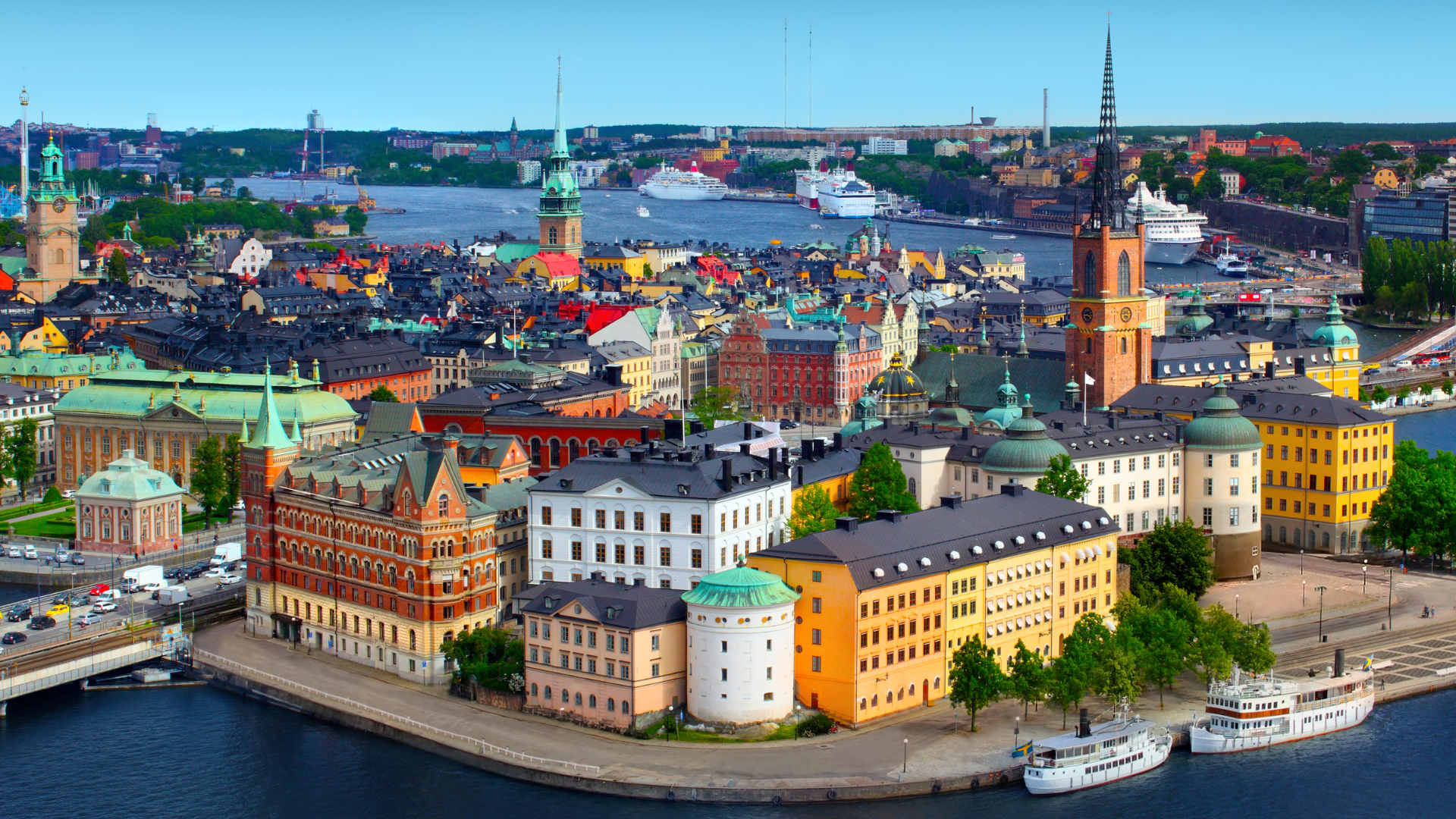
Stockholm shows the way: how public buyers can boost the carbon removal market
The City of Stockholm's landmark carbon removal purchase from Stockholm Exergi's BECCS project is more than a local climate win - it's a signal to policymakers and market actors that public procurement can and should drive the CDR market forward.
The City of Stockholm's landmark carbon removal purchase from Stockholm Exergi's BECCS project is more than a local climate win - it's a signal to policymakers and market actors that public procurement can and should drive the CDR market forward.
The carbon removal market has long struggled with lack of liquidity and diversity of buyers. Simply put, the market has been dominated by a few major buyers, making it difficult for suppliers to secure offtakes and take final investment decisions on their projects. Last week, the City of Stockholm entered the market and showed that it pays to go beyond the group of usual suspects when looking for prospective buyers.
Stockholm has signed a major carbon dioxide removal purchase from Stockholm Exergi, committing to 750,000 tonnes of CDR to be delivered over fifteen years – 50,000 tonnes per year – sourced from Stockholm Exergi's new BECCS facility currently under development near Värtaverket in the Stockholm energy port. The captured CO₂ will be transported by ship to Bergen, Norway, where it will be permanently stored deep beneath the seabed at the Northern Lights Facility.
Once fully operational, the facility will capture 800,000 tonnes of CO₂ each year – more than the total fossil emissions from Stockholm's road traffic over an entire year. With this purchase, Stockholm has at a stroke become the world's fifth largest buyer of permanent carbon removal. In doing so, they serve as an example for other cities with ambitious climate plans on how to make carbon removal part of delivering on targets and promises.
Grounded in a serious climate strategy
Stockholm's Climate Action Plan 2030 explicitly requires that the city must remove more CO₂ than it emits into the atmosphere by 2030, making CDR a central pillar of the city's strategy rather than an afterthought. This is not a standalone purchase. Stockholm Exergi, Stockholms Hamn, and Stockholm Vatten och Avfall are all under significant city ownership, meaning Stockholm has embedded CDR systematically across its public infrastructure rather than treating it as a one-off gesture.
The demand problem – and why it matters
Carbon Gap has long argued that weak demand is the main barrier to scaling durable carbon removal in Europe. The current pace and volume of purchases currently being made by corporate buyers on the voluntary carbon market are not enough to support the growth of a new CDR industry.
The EU has set itself the target of permanently removing 5 MtCO₂ per year by 2030, and its 2040 Climate Target impact assessment signalled a need for at least 114 MtCO₂ of permanent removals per year by 2050. At the current pace of removals, Europe will fall well short. What is needed is a sustained demand signal from the public sector – one that crowds in private investment rather than waiting for it to appear on its own. By purchasing significant volumes of CDR from its own supplier, the City of Stockholm can reach its climate ambitions, contribute to the success of Stockholm Exergi, and energize the voluntary carbon market.
A model for others to follow
In our 2024 policy brief, Carbon Gap set out the case for an EU pilot procurement programme for carbon removal. Early lessons from US procurement efforts have shown that public money can have a multiplier effect, with private buyers matching the funds provided by government. Stockholm has now shown that long-term public commitment to purchasing permanent carbon removal is politically and practically achievable, adding a new category of buyers on the market in the process. By making a long-term procurement commitment, the City can support one of its core assets, create real revenue certainty for a major CDR project, and inspire action amongst other Swedish, Nordic and European cities.
The question is whether others will follow. Sustainable procurement frameworks, the Carbon Removal Certification Framework, and national climate investment plans all offer entry points for making public CDR purchasing a norm rather than an exception. Stockholm has provided more than a proof of concept. It has shown that a city with a serious climate plan, the right governance structures, and the political will to act can become a meaningful CDR buyer almost overnight. Copenhagen, Amsterdam, Oslo, and Helsinki all have the climate ambitions. They now have the template. The question is whether they will use it, and whether the EU's own procurement framework will follow where Stockholm has led.