 Market creation and price signals
FEEBATE SCHEMES
Lever last updated: 8 September 2026
Fee-and-rebate systems that reward low-carbon and removal-linked choices.
Cost
High to Very high on a gross basis
For example, France paid EUR 314 million in rebates in 2019. Fee revenue can offset expenditure, but the net fiscal cost depends on calibration and market response.
Complexity
Medium to High
For example, VANA, a Danish producer-responsibility organisation, managed packaging obligations for companies through a schedule requiring classification, quantity reporting and technical documentation. CDR variants would require benchmarks, certification, tracking and reversal procedures.
Timeline
Very short to Medium
For example, France moved from announcing its scheme on 5 December 2007 to charging qualifying registrations from 1 January 2008. CDR variants would require prior benchmark and verification systems.
Integrity, transparency & MRV
Innovation & cost reduction
Social & environmental safeguards
Energy, transport & storage infrastructure
Inputs & capacity
Demand formation
Bankability and cost of capital
Policy architecture & coordination
Overview
A feebate applies a fee to products or activities above a carbon-performance benchmark and a rebate below it. A familiar example is vehicle policy, where buyers of high-emission cars pay a surcharge and buyers of lower-emission cars receive a bonus. For CDR, the mechanism is credible only within a common product class or producer pool where performance can be compared and improved. This lever therefore focuses on carbon-storing construction products and buildings, and on production systems capable of becoming net-removing. It does not cover fees on unrelated emitters used to subsidise standalone removals, which belong under revenue earmarking, obligations or procurement. Unlike a deposit-refund scheme, the original payer does not recover its own fee by later performing a qualifying act.
Key Considerations
Setting the boundary between the fee and the rebate is the central design decision. For example, France’s vehicle bonus-malus, introduced in 2007–08, charged buyers of high-emission cars and rewarded buyers of lower-emission models. Bonus expenditure initially exceeded malus receipts because purchases shifted toward eligible vehicles faster than forecast, producing a substantial first-year deficit. An overly generous boundary can therefore create sustained fiscal costs, while a stringent one weakens the incentive. Governments must also define the covered product class, prevent reclassification, determine how surpluses and deficits are handled, and establish credible rules for measuring removal or stored-carbon content and managing reversals. A CDR-specific scheme should distinguish ordinary emissions reductions from certified removals, potentially using a neutral band and an enhanced removal rebate. Where producers can also receive insetting payments or other support, the rules should disclose combined finance, prevent overcompensation, assign the carbon attribute and specify whether the rebate purchases or retires any resulting unit.
Opportunities
Feebates deliver a continuous price signal rather than a binary standard and can recycle revenue within the market being transformed. The clearest CDR application is the built environment. At material level, products above an embodied-carbon benchmark could pay a fee while comparable products containing verified atmospheric or biogenic carbon receive a rebate. At whole-building level, developers could pay where embodied emissions per square metre exceed a benchmark and receive a rebate for certified carbon stored in long-lived building materials. This could improve the economics of biochar composites, durable bio-based materials and products that permanently bind atmospheric or biogenic CO₂.
Risks
Calibration error can produce deficits or dead incentives, while classification gaming can move products or producers onto the favourable side of the schedule. Weak carbon accounting can turn the rebate into a subsidy for paperwork. Agricultural variants could penalise farmers for soil, weather or inherited conditions they cannot control and strengthen buyer power over smaller suppliers. Ambiguous stacking rules can also create overcompensation or duplicate claims. Political changes may separate the two halves, leaving a fee without a rebate or an unfunded rebate without its balancing charge.
Monitoring and Evaluation
Monitoring can compare fee receipts with rebate expenditure, movement across the performance schedule, verified removals and changes in market share. Product declarations, building assessments, facility data and certification registries can be reconciled to test whether rebates correspond to delivered storage. Agricultural variants also require assessment of price pass-through, effects across different farm types and the treatment of weather-related variation. Scheduled evaluations can inform adjustment when fiscal balance, market response, removal delivery or distributional outcomes move outside the intended corridor.
Stakeholder Engagement
Finance ministries and tax authorities can design the fiscal schedule, while building authorities, sector regulators and certification bodies can define comparable products, benchmarks and removal criteria. Material producers, developers and industrial facilities can test whether the schedule permits realistic investment responses. Agricultural variants require processors, cooperatives, farmers and corporate buyers to clarify contractual control, data access and price pass-through. Consumer, competition and environmental authorities can identify distributional, market-power and integrity risks.
Governance Levels
A governance level should be included only where the same actor can impose both sides of the schedule, compare performance across a common pool and give regulated parties a realistic way to improve it. National governments are the natural lead because they control product taxes and rebates, as France’s vehicle bonus-malus demonstrates. Supranational authorities can harmonise schedules across integrated markets, although the EU’s vehicle rules currently provide only a fee-side precedent. Regional/State and City/municipal authorities can operate building-level variants where they control permits, charges and rebates. Corporate/Industry bodies can administer statutory producer schemes, as VANA does for Danish packaging, or contractual supplier pools. Their authority ends outside the covered membership or supply chain, and a bonus-only programme is an insetting incentive rather than a feebate.
Implementation Strategies
Implementors can begin with a common product class or producer pool where outputs are comparable and participants can improve performance.
The scheme can place ordinary emissions reductions within a neutral band and reserve an enhanced rebate for certified removal or stored-carbon performance.
The founding instrument can establish a fiscal balance corridor, multi-year rates and automatic adjustments for deficits, surpluses and market shifts.
Agricultural variants should use prospective contracts with explicit rules for stacked finance, carbon-attribute ownership, reversals and uncontrollable risks.
Case Studies

France’s vehicle bonus-malus
France enacted a carbon dioxide-based malus in the 2007 finance law and bonus in the December 2007 clean-vehicle decree, with the first registrations affected from January 2008. The original design used charges on high-emission vehicles to support lower-emission purchases, but fiscal balance proved unstable. On 1 July 2025, the state ecological bonus ended and purchase support moved to energy-savings certificates, while the malus remained. This emissions-reduction analogue shows how quickly a feebate can operate and how its two halves can drift apart. A CDR version would need tighter funding and adjustment rules.

Sweden’s bonus-malus and partial abolition
Sweden introduced its vehicle bonus-malus on 1 July 2018. Low-emission vehicles could receive a purchase bonus, while higher-emission vehicles paid an elevated tax for their first three years. The government ended eligibility for newly ordered bonus vehicles after 8 November 2022, and the final application period closed in May 2024, while the malus continued. This emissions-reduction analogue demonstrates the political asymmetry between visible rebates and continuing taxes. A removal feebate should place both components in the same statutory adjustment process to reduce the risk of abrupt demand withdrawal.

VANA’s packaging fee modulation
VANA is a not-for-profit producer-responsibility organisation founded by four Danish business associations to manage the legal, financial and practical packaging obligations of its member companies. It began operating under Denmark’s statutory packaging producer-responsibility scheme on 1 October 2025. Within each material category, low-recyclability packaging pays a 35% malus, while the resulting income reduces costs for highly recyclable packaging, maintaining cost neutrality within that category. Producers must classify and document their packaging against common criteria. The scheme rewards recyclability rather than CDR, but demonstrates how legislation can define coverage while an industry-founded body administers a fee-and-rebate schedule.
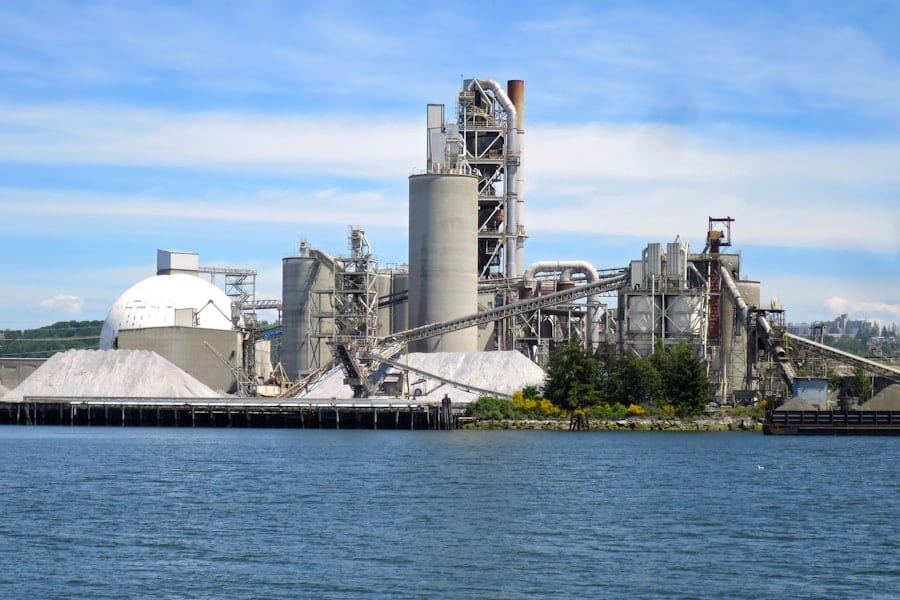
International Monetary Fund modelling of industrial feebates (concept)
In 2021, International Monetary Fund staff modelled a sectoral feebate that charges facilities above an industry emissions-intensity benchmark and subsidises those below it. At a carbon price of USD 50 per tonne, its cement example increased conventional production costs by about USD 5 per tonne while providing USD 10 per tonne to efficient plants and USD 18-35 per tonne to plants using carbon capture. The proposal has not been implemented and concerns emissions reduction rather than CDR. Its CDR relevance is the architecture: applying the calculation to net emissions in biogenic industries could give biogenic carbon capture and storage an enhanced rebate once production falls below zero.
More Market creation and price signals

Emissions trading system
A mechanism capping emissions and allowing trading of allowances.
Cost
Low
Complexity
High
Timeline
Medium to Long
Integrity, transparency & MRV
2–4Innovation & cost reduction
2–4Social & environmental safeguards
1–3Energy, transport & storage infrastructure
N/AInputs & capacity
N/ADemand formation
2–5Bankability and cost of capital
2–4Policy architecture & coordination
2–4
Removal compliance system
An annual purchase obligation requiring covered companies to buy verified permanent removals.
Cost
Low to Medium
Complexity
Medium to High
Timeline
Medium to Long
Integrity, transparency & MRV
3–4Innovation & cost reduction
2–4Social & environmental safeguards
1–3Energy, transport & storage infrastructure
N/AInputs & capacity
N/ADemand formation
3–5Bankability and cost of capital
2–4Policy architecture & coordination
3–4
Carbon tax
A direct tax on carbon emissions to incentivise reductions.
Cost
Very low to Low
Complexity
Low to High
Timeline
Very short to Long
Integrity, transparency & MRV
1–2Innovation & cost reduction
2–4Social & environmental safeguards
N/AEnergy, transport & storage infrastructure
N/AInputs & capacity
N/ADemand formation
2–4Bankability and cost of capital
2–3Policy architecture & coordination
2–3©2026 Alexander Mäkelä and Carbon Gap.
Except where otherwise indicated, this work is licensed under the Creative Commons Attribution–NonCommercial–ShareAlike 4.0 International Licence.
Headline and barrier scores based on Carbon Gap analysis.