 Market creation and price signals
CARBON CENTRAL BANK
Lever last updated: 8 September 2026
A public institution managing removal credit supply and demand.
Cost
Medium to Very high
Establishing a limited institution or pilot reserve could require tens of millions of euros annually, while purchasing and holding removal units at market scale could require hundreds of millions or billions.
Complexity
High to Very high
A national or regional institution would require a statutory mandate, balance-sheet authority, market-operating capacity and rules for removal assets. A supranational institution would additionally require agreement across EU institutions and integration with the EU ETS.
Timeline
Long to Very long
Creating the legal mandate, institution and operating systems is likely to take at least five years, while establishing a supranational institution with sufficient authority and market confidence could take more than ten.
Integrity, transparency & MRV
Innovation & cost reduction
Social & environmental safeguards
Energy, transport & storage infrastructure
Inputs & capacity
Demand formation
Bankability and cost of capital
Policy architecture & coordination
Overview
Key Considerations
It requires a clear legal mandate (e.g. meet net-zero) and operational independence. Eligible removal types must be well-defined with rigorous MRV. Coordination with existing carbon markets (e.g. integration with the EU ETS) is crucial. The bank may need to build a reserve of removal credits to stabilise the market. Its rules should also avert moral hazard, ensuring companies do not use future removals as an excuse to delay cutting emissions.
Opportunities
By guaranteeing demand for removals, a carbon central bank would boost investor confidence and accelerate CDR deployment. It also allows flexible compliance: emitters could obtain “clean-up certificates” to offset residual emissions later, cutting near-term costs while ensuring future cleanup. The bank can gradually push beyond net-zero into net-negative emissions by tightening quotas. Moreover, insulating climate policy from political swings provides consistency and may lower costs by smoothing carbon market volatility.
Risks
Politically, giving climate control to an independent body may face pushback. Poor calibration is another risk: issuing too many credits could weaken ambition, while too few could send carbon prices soaring. Some fear it might encourage complacency by allowing emissions now on the promise of removals later, which could fail if technology disappoints. The model is untested and complex, and it must coordinate with other policies (carbon taxes, international markets) to avoid unintended effects.
Monitoring and Evaluation
Evaluation should compare net emissions with the target, check whether promised future removals are delivered and examine whether prices for emissions permits and removals remain stable. Excessive price swings can inform decisions to release or withhold credits, while independent audits can test credit integrity. The findings should guide changes to the volume and timing of credit issuance.
Stakeholder Engagement
Policymakers set the bank’s mandate and oversight. Financial and market experts aid in designing effective mechanisms. Industry players should be involved to ensure the system is practical and to gain buy-in. Environmental NGOs and scientists can help establish stringent criteria and transparency. If implemented at EU or international level, coordination among governments is essential.
Governance Levels
The concept is designed for supranational scale: a European institution managing removal supply alongside the EU ETS is where the proposal literature points. A single nation could pilot elements of the design, but the stabilisation logic works best across the largest possible market, and fragmentation would recreate the imbalances the bank exists to manage.
Implementation Strategies
Begin with a pilot carbon removal purchasing programme or reserve to mimic the bank’s role.
In parallel, pass a law establishing the bank’s mandate and governance.
Phase in operations: initially assist with removal credit auctions and build a credit reserve, then gradually assume full control over credit issuance and market stabilisation.
Maintain transparency (regular public reports) and set up safeguards (penalties or backups if future removals fail). Pilot trials can validate the concept before full rollout.
Case Studies

European Carbon Central Bank (Concept)
Researchers from the Potsdam Institute for Climate Impact Research and the Mercator Research Institute have proposed an independent European Carbon Central Bank. The institution would issue “clean-up certificates” linking present emissions to obligations for future carbon removal, while managing the supply of certificates in line with European climate targets. Its proposed independence is intended to provide long-term credibility comparable to that of a monetary central bank. No European Carbon Central Bank has been established, and its legal mandate, balance-sheet structure and relationship with the EU ETS remain unresolved.

EU Market Stability Reserve
The EU agreed the Market Stability Reserve in 2015 and began operating it in 2019. The reserve adjusts the number of allowances auctioned under the EU ETS according to predefined thresholds for the total number of allowances in circulation. When the surplus exceeds the upper threshold, allowances are withheld from auctions; when it falls below the lower threshold, allowances can be released. The mechanism demonstrates that a supranational carbon market can operate predictable, rule-based supply management across participating countries. It is not institutionally independent, does not actively target a carbon price and does not issue or purchase removal certificates, so it represents only the market-stability component of a Carbon Central Bank.

California Allowance Price Containment Reserve
California places a portion of its emissions allowances into an Allowance Price Containment Reserve and offers them for sale at predetermined price tiers. The reserve gives the California Air Resources Board a mechanism for releasing additional units when allowance prices rise, providing an operational example of a Regional/State authority managing carbon-unit supply through transparent intervention rules. It demonstrates that reserve functions can be incorporated into an existing emissions market without establishing an entirely separate institution. The reserve contains emissions allowances rather than removal certificates, and CARB is a regulator rather than an independent central bank.
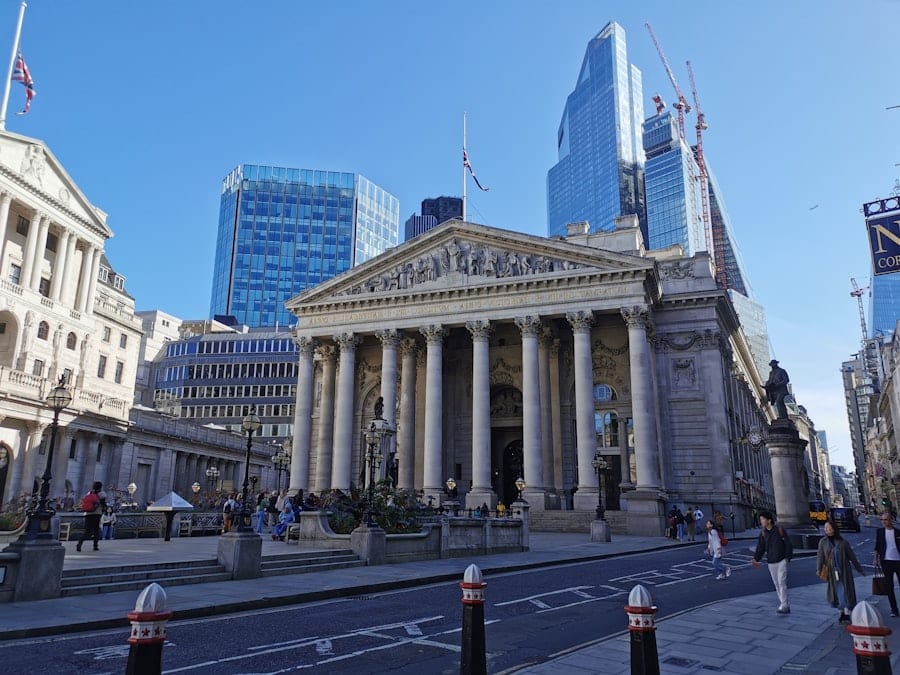
UK ETS Market-Stability Mechanisms
The UK ETS operates both an Auction Reserve Price and a Cost Containment Mechanism. The Auction Reserve Price establishes the minimum price accepted in allowance auctions, while the Cost Containment Mechanism allows the UK ETS Authority to consider interventions following sustained high-price triggers. Together, these mechanisms demonstrate that a national authority can monitor a carbon market and operate predetermined tools intended to contain extreme price movements. The Authority does not function independently of government, manage a balance sheet of removal assets or align the supply of removal certificates with future net-negative targets. The case therefore supports national implementation capability rather than the full Carbon Central Bank model.
More Market creation and price signals

Emissions trading system
A mechanism capping emissions and allowing trading of allowances.
Cost
Low
Complexity
High
Timeline
Medium to Long
Integrity, transparency & MRV
2–4Innovation & cost reduction
2–4Social & environmental safeguards
1–3Energy, transport & storage infrastructure
N/AInputs & capacity
N/ADemand formation
2–5Bankability and cost of capital
2–4Policy architecture & coordination
2–4
Removal compliance system
An annual purchase obligation requiring covered companies to buy verified permanent removals.
Cost
Low to Medium
Complexity
Medium to High
Timeline
Medium to Long
Integrity, transparency & MRV
3–4Innovation & cost reduction
2–4Social & environmental safeguards
1–3Energy, transport & storage infrastructure
N/AInputs & capacity
N/ADemand formation
3–5Bankability and cost of capital
2–4Policy architecture & coordination
3–4
Carbon tax
A direct tax on carbon emissions to incentivise reductions.
Cost
Very low to Low
Complexity
Low to High
Timeline
Very short to Long
Integrity, transparency & MRV
1–2Innovation & cost reduction
2–4Social & environmental safeguards
N/AEnergy, transport & storage infrastructure
N/AInputs & capacity
N/ADemand formation
2–4Bankability and cost of capital
2–3Policy architecture & coordination
2–3©2026 Alexander Mäkelä and Carbon Gap.
Except where otherwise indicated, this work is licensed under the Creative Commons Attribution–NonCommercial–ShareAlike 4.0 International Licence.
Headline and barrier scores based on Carbon Gap analysis.