Environment Council debate on 2040 targets: France calls for separate targets for CDR
This week's Environment Council meeting saw increasing recognition for the role of carbon removal in the EU’s climate framework among member states.
Brussels, 18 December 2024 – Yesterday, EU Environment Ministers in the Council discussed Europe’s climate ambition for 2040, in the context of the upcoming revision of the European Climate Law (ECL).
This session has seen several EU member states, including Germany, Spain, Denmark, and Estonia, voice support for the Commission’s recommendation for a net 90% emissions reduction target for 2040. A significant group of countries have not only voiced support for the target, but explicitly mentioned the role of both technological, as well as nature-based removals, towards achieving the EU climate goals. France has explicitly called for separate targets for gross emissions reductions and carbon removals, citing “uncertainty” in the evolution of carbon sinks as the main reason. Overall, countries in favour of the 90% reduction target wish to see it adopted swiftly, allowing the EU to present an updated NDC in time for COP 30, and have urged to be “ambitious and realistic”, asking for more visibility on the means to achieve the 2040 target. Aside from the net target, some member states mentioned the need for further EU policies to support CDR (e.g., compliance markets or inclusion of removals in EU funding mechanisms for cleantech).
Carbon Gap welcomes the net 90% emissions reduction target, which aligns with the recommendation of the European Scientific Advisory Board on Climate Change. We urge the European Commission to incorporate this net target in the Climate Law proposal, hoping the co-legislators will fully endorse it. To put the EU successfully on the path to climate neutrality by 2050, the net target must be underpinned by separate sub-targets for gross emissions reductions, permanent CDR and LULUCF sinks, as already called by the European Parliament in their COP29 Resolution and as called on by France during the Council meeting. Without such sub-targets, the CDR sector risks falling short of the capacity needed to close the gap by 2050.
“While it was encouraging to hear many member state representatives acknowledge the importance of carbon removal in reaching climate neutrality, the EU still lacks a clear roadmap to achieve this goal. Crucially, the need for separate 2040 sub-targets for gross emissions reductions, LULUCF, and permanent carbon removal risks to be overlooked — a glaring gap that academia, NGOs, and the CDR sector unanimously agree must be addressed. Without these sub-targets, the EU will try to navigate its climate ambitions with no compass. Including them in the Climate Law revision is essential to scale up the CDR sector and ensure the integrity of the EU climate framework”, says Rodica Avornic, Policy Director at Carbon Gap.
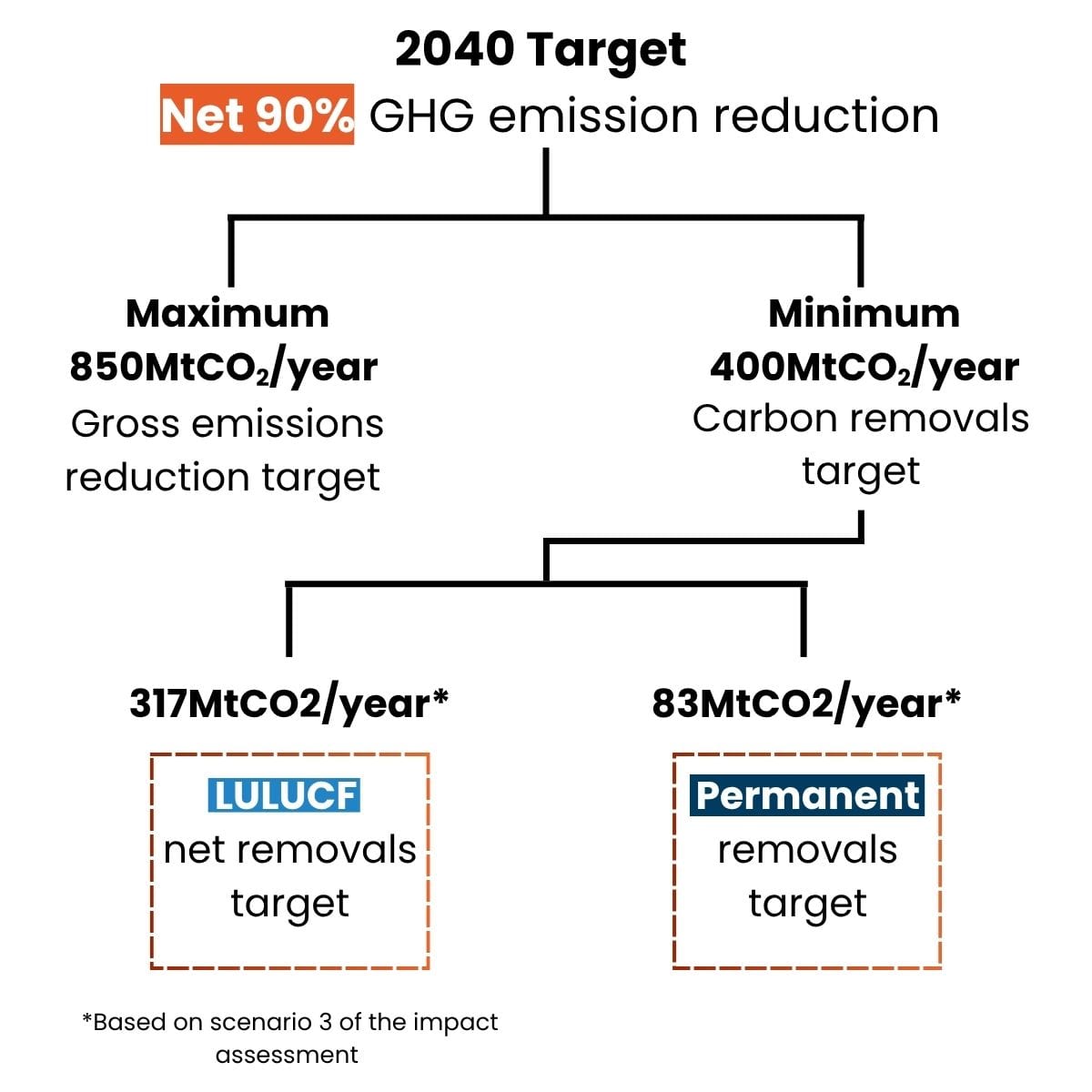
Figure 1. Carbon Gap’s proposal for a 2040 climate targets architecture.
Setting separate targets in the Climate Law would ensure the CDR sector grows responsibly, complementary to emission reductions. Separate targets are crucial for maintaining the integrity of the EU climate framework, ensuring that efforts to reduce GHG emissions and scale up CDR are carried out in parallel, with CDR used to balance residual emissions towards net-zero. Moreover, having separate targets for LULUCF and permanent CDR would ensure that the EU does not over-rely on LULUCF sinks.
While the European CDR sector has grown significantly in the past years, many frontrunners, particularly startups, and SMEs, are still struggling to secure investments. This challenge would be addressed with a binding EU permanent CDR target enshrined in the ECL, providing the sector with a clear and stable demand signal. Delaying demand incentives until 2026 – or later – risks losing key players and thus jeopardising a sector which could grow into a €220 billion annual market by 2050, creating 670,000 jobs across Europe.
The establishment of 2040 climate ambition also aligns with the global process of setting 2035 Nationally Determined Contributions. In an era of geopolitical uncertainty, Europe’s climate leadership is critical to encouraging other regions to uphold their Paris Agreement commitments. This is particularly important as US support for CDR might waver, with the incoming Administration casting doubt on its commitment to climate policy. Europe must step up to fill this gap.
While setting sub-targets is crucial, it alone will not be enough to scale up the necessary volumes of CDR. To make these targets meaningful and achievable, the European Union must urgently back them with robust policy measures and substantial financial support.
Next steps
The ENV Council debate on the 2040 climate target is organised in preparation for the European Commission’s publication of the European Climate Law revision, expected in February 2025. Once published, the Council and the European Parliament will develop their separate positions on the Commission’s proposal. A final text is expected to be agreed by the three EU Institutions before COP30 in November 2025.